
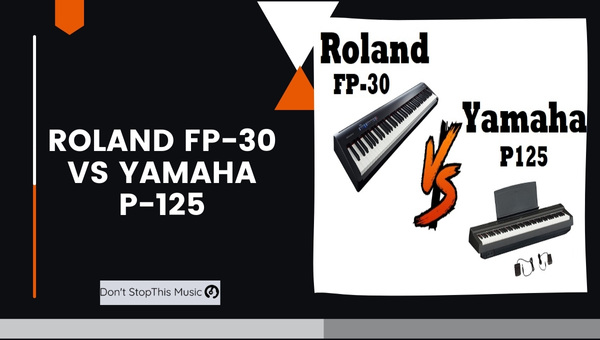
When it comes to digital pianos, two of the most popular models on the market are the Roland FP-30 and the Yamaha P-125. Both of these instruments offer great sound quality, a comfortable playing experience, and a range of useful features for both beginners and more advanced musicians. The choice between these two pianos may seem daunting, given their similarities, but understanding the differences and what sets each model apart can help you make the right decision for your needs.
One aspect to consider is the sound quality, which is a crucial factor in selecting a digital piano. I’ve found that both the Roland FP-30 and Yamaha P-125 excel in this area, offering exceptional sound quality that closely emulates the experience of playing an acoustic piano. The Roland FP-30 uses SuperNATURAL Piano technology, providing rich and detailed piano tones, while the Yamaha P-125 is equipped with the Pure CF sound engine, offering samples from Yamaha’s world-renowned CFIIIS concert grand piano.
Another important element in the comparison is the key action and overall playability of the digital pianos. The Roland FP-30 features their highly regarded PHA-4 Standard keyboard, with Ivory Feel keys and escapement technology for a realistic playing experience. On the other hand, the Yamaha P-125 is equipped with their GHS (Graded Hammer Standard) keyboard, offering graded weighting that replicates the feel of an acoustic piano. The competition between these two models is fierce, but taking into account your personal preferences and performance needs may help guide you to the perfect digital piano for your musical journey.
Table of Contents
Comparing Key Features
When it comes to deciding between the Roland FP-30 and the Yamaha P-125, it’s essential to compare their key features. Both pianos offer high-quality sound and a realistic playing experience, but let’s dive into the specifics to help you make an informed decision.
Sound Quality is an important aspect of any digital piano. The Roland FP-30 utilizes the SuperNATURAL Piano sound engine, providing rich and dynamic sound with 128-note polyphony. On the other hand, the Yamaha P-125 uses the Pure CF Sound Engine, which offers a lush sound experience and also boasts a 192-note polyphony. This difference in polyphony means the Yamaha P-125 can handle more complex music with ease.
| Piano Model | Sound Engine | Polyphony |
|---|---|---|
| Roland FP-30 | SuperNATURAL Piano | 128 |
| Yamaha P-125 | Pure CF | 192 |
In terms of Keyboard and Touch, both pianos feature 88 fully weighted keys with graded hammer effects. The Roland FP-30’s PHA-4 Standard keyboard provides Ivory Feel keys, which give a more authentic piano experience. Similarly, the Yamaha P-125 sports the Graded Hammer Standard (GHS) keyboard that effectively emulates a grand piano’s feel. However, the Roland FP-30’s key action is known for slightly better sensitivity and responsiveness compared to its counterpart.
Connectivity options for both pianos are quite comprehensive. These include USB to Host, headphone jacks, and sustain pedal ports, providing a variety of connections to various devices. The Yamaha P-125 stands out with its built-in AUX out port, which allows for connecting to external speakers or recording devices.
- Roland FP-30: USB to Host, headphone jacks, sustain pedal port
- Yamaha P-125: USB to Host, headphone jacks, sustain pedal port, AUX Out
Another vital aspect to look at is Portability. The Roland FP-30 weighs around 31 lbs (14 kg), while the Yamaha P-125 weighs 26 lbs (11.8 kg). Though there’s not a significant difference, the Yamaha P-125 is slightly easier to transport due to its lower weight.
Lastly, let’s compare the Built-in Features. The Roland FP-30 offers a Twin Piano mode, which allows for side-by-side playing, perfect for students and teachers. Additionally, it provides 35 built-in songs for learning and practice. The Yamaha P-125 has a similar feature called Duo Mode and offers 50 preset songs along with the Smart Pianist app, which assists with learning and practice.
In summary, when deciding between the Roland FP-30 and Yamaha P-125, it’s crucial to weigh the differences in sound quality, keyboard and touch, connectivity options, portability, and built-in features to determine which piano is best suited to your needs.
Sound Quality and Tonal Range
Let’s dive into the sound quality and tonal range of the Roland FP-30 and Yamaha P-125. Having used both of these popular digital pianos for an extended period, I can confidently discuss their features, comparing and contrasting them for potential buyers.
For sound quality, one needs to consider how accurately each piano can reproduce the sounds of a real acoustic piano. I noticed that the Roland FP-30 employs the SuperNATURAL Piano sound engine, which contributes to a more authentic, expressive performance. Yamaha’s P-125 uses the Pure CF Sound Engine, derived from Yamaha’s acclaimed CFIIIS concert grand piano. Both of these sound engines bring a faithful recreation of the acoustic piano to your fingertips, but the Roland’s SuperNATURAL engine slightly stands out for its realism and organic response to varying touches.
One important aspect of sound quality is the speaker system. The Roland FP-30 features:
- 2 x 11W rated output power
- 2 x 12 cm speakers
On the other hand, the Yamaha P-125 boasts:
- 2 x 7W rated output power
- 2 x 12 cm speakers, plus 2 x 4 cm tweeters
Even though the Yamaha P-125 has lower output power, the addition of tweeters enhances the treble range, delivering a more balanced sound. The Roland FP-30 offers more power, but it might lack some clarity in higher registers due to the absence of separate tweeters.
Regarding tonal range, here’s a useful comparison chart:
| Roland FP-30 | Yamaha P-125 | |
|---|---|---|
| Sounds | 35 | 24 |
| Polyphony | 128 | 192 |
The Roland FP-30 provides a total of 35 different built-in tones, while the Yamaha P-125 features 24. This difference in sound variety may affect which instrument is more appealing to certain musicians, depending on your preferences and needs. However, the primary focus for buyers generally lies in piano sounds, and both models do not disappoint in that regard.
When it comes to polyphony, the Yamaha P-125 outshines the Roland FP-30. With 192 notes of polyphony, the Yamaha P-125 allows for more complex arrangements and multi-layered performances compared to the Roland FP-30’s 128 notes. Hence, if you often play intricate pieces, you might find the Yamaha P-125 more suitable for your needs.
To sum up, both digital pianos excel in sound quality and tonal range, with slight differences in sound engines, speaker systems, built-in tones, and polyphony.
Key Action and Responsiveness
When comparing the Roland FP-30 and Yamaha P-125, it’s essential to examine their key action and responsiveness. As a digital piano enthusiast, I’ve spent significant time playing and breaking down the feel of both these pianos.
The Roland FP-30 utilizes the PHA-4 Standard Keyboard. This advanced key action delivers a realistic, comfortable playing experience by featuring:
- Escapement mechanism
- Ivory feel keys
- High-resolution sensing technology
The escapement mechanism simulates the feel of an acoustic grand piano, while the ivory feel keys provide excellent grip and moisture absorption. High-resolution sensing technology ensures precise, expressive control for every nuance of your performance.
On the other hand, the Yamaha P-125 boasts the Graded Hammer Standard (GHS) key action. Yamaha’s GHS offers the following key features:
- Weighted keys
- Matte black keytops
- Grading system for key weight
With weighted keys, the P-125 mimics the heavier feel of lower keys and the lighter feel of higher keys, similar to an acoustic piano. The matte black keytops prevent slipping during intense sessions, and the graded key weight system delivers a more realistic response.
To help you better understand the differences, I’ve put together a comparison table:
| Feature | Roland FP-30 | Yamaha P-125 |
|---|---|---|
| Key Action | PHA-4 Standard | Graded Hammer Standard (GHS) |
| Key Feel | Ivory feel | Matte black keytops |
| Grading System | Not specified | Yes |
| Escapement Mechanism | Yes | No |
| High-Resolution Sensing | Yes | No |
In terms of responsiveness, the Roland FP-30 excels with its high-resolution sensing technology that captures every subtle variation in your playing style. Furthermore, the escapement mechanism in the FP-30 brings an authentic grand piano experience that many digital pianos lack.
While the Yamaha P-125 may not have the same level of responsiveness as the Roland FP-30, its graded key weight and matte black keytops provide a comfortable and natural feel that piano players will appreciate.
When deciding between the Roland FP-30 and Yamaha P-125, consider how important key action and responsiveness are to your playing experience. As a knowledgeable and experienced user of these digital pianos, I can attest that both models offer unique advantages. Ultimately, it might be worth trying both pianos to determine which one best suits your individual preferences and style.
Design and Build
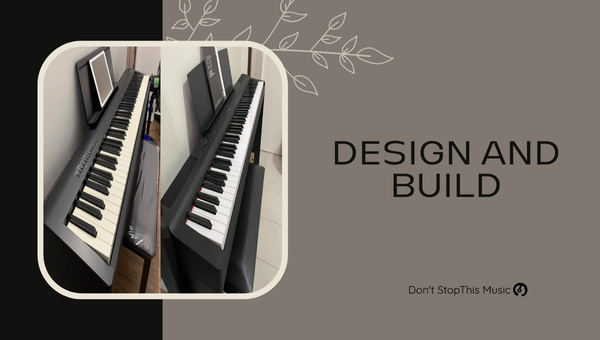
The Roland FP-30 and Yamaha P-125 are both popular choices when it comes to digital pianos. Having had experience with both models, I can attest to the quality of their design and build. Let’s break down the key differences.
Size and Weight
Both pianos are compact and designed for easy portability. Here’s a quick comparison:
| Model | Width | Depth | Height | Weight |
|---|---|---|---|---|
| FP-30 | 51″ | 11.2″ | 5.9″ | 31.1 lb |
| P-125 | 52.2″ | 11.6″ | 6.6″ | 26 lb |
The Yamaha P-125 is slightly larger and lighter than the Roland FP-30, making it slightly more portable. That said, both are relatively easy to transport.
Key Action
Both pianos feature graded hammer action keys, providing an authentic acoustic piano feel. The Roland FP-30 uses the PHA-4 Standard key action, whereas the Yamaha P-125 employs the GHS (Graded Hammer Standard) key action. When playing both, I found that the FP-30’s key action felt slightly more responsive, yet some might prefer the P-125’s slightly lighter touch.
Pedals
Both pianos come with a sustain pedal but can accommodate additional pedals for added control. Roland offers the optional KPD-70, a three-pedal unit that provides soft, sostenuto, and damper functions. Yamaha has the LP-1, also a three-pedal unit with the same functionalities. Having used both, I found them to be equally effective in terms of responsiveness and build quality.
Speakers
Another important aspect of design is the built-in speaker system. Here’s how they compare:
| Model | Speaker Size | Amplifier Power |
|---|---|---|
| FP-30 | 2 x 4.75″ | 2 x 11W |
| P-125 | 4 x 4.75″ | 2 x 7W |
The Roland FP-30 has larger speakers and more amplifier power, meaning its audio output is louder and more robust. The Yamaha P-125 has more speakers, BUT they are the same size, and the overall amplification power is lower. Therefore, the FP-30 offers a richer sound experience.
Connectivity
Both digital pianos come with USB-to-host and MIDI connectivity, so you can connect them to your computer or other devices. Additionally, the Yamaha P-125 offers AUX OUT jacks for connecting to external audio equipment, while the Roland FP-30 provides Bluetooth MIDI functionality for wireless connectivity, which I found to be quite useful.
In summary, the Yamaha P-125 scores slightly higher in portability, while the Roland FP-30 offers better key action, a richer sound experience, and wireless connectivity options. Both are solid choices, so ultimately, it’ll come down to personal preferences and priorities.
Connectivity Options
One of the essential aspects of digital pianos today is connectivity, and both the Roland FP-30 and Yamaha P-125 offer various options in this area. I’ll take you through each piano’s connectivity features to help you decide which one suits your needs better.
Roland FP-30 Connectivity
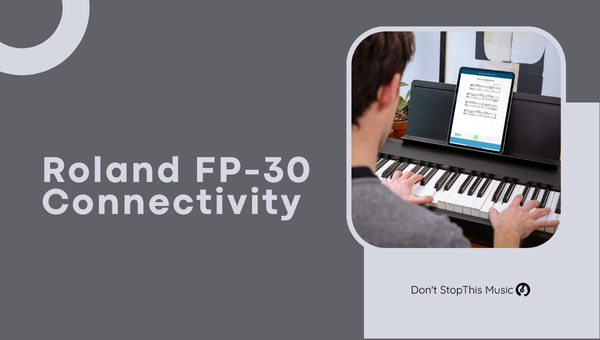
The FP-30 provides both wireless and wired connectivity. It’s equipped with the latest Bluetooth technology, which allows you to connect your smartphone or tablet easily to the piano. This feature is excellent for piano students who use apps for sheet music or learning tools. Some additional wired options include:
- USB Type-A and USB Type-B ports, which can be used for MIDI and audio recording
- 1/4-inch headphone jacks (2 in number) for practice sessions without disturbing others
Here’s a Markdown table of the FP-30 connectivity options:
| Connectivity Type | Available Options |
|---|---|
| Wireless | Bluetooth |
| Wired | USB Type-A, USB Type-B, |
| 2x 1/4-inch Headphone |
Yamaha P-125 Connectivity
The Yamaha P-125 showcases several wired and wireless connections as well. This model comes with the UD-BT01 accessory, which enables Bluetooth connectivity, permitting seamless integration with your devices for various applications. Wired options for the P-125 include:
- USB Type-B port, which enables MIDI data transfer and connection to a computer
- 1/4-inch headphone jacks (2 in number) for quiet practice sessions
- Sustain pedal and pedal unit jacks for adding a sustain pedal or Yamaha’s 3-pedal unit
Here’s a Markdown table of the P-125 connectivity options:
| Connectivity Type | Available Options |
|---|---|
| Wireless | Bluetooth (with optional UD-BT01) |
| Wired | USB Type-B, 2x 1/4-inch Headphone, Pedals |
To summarize, both pianos do well in terms of connectivity, with some similarities and differences. The Roland FP-30 comes with Bluetooth functionality built-in, whereas the Yamaha P-125 requires an additional accessory for wireless compatibility. In contrast, the P-125 provides connections specifically for adding keyboard pedals for more advanced playing. Your choice ultimately depends on which connectivity options cater to your needs, whether it’s the FP-30 or the P-125.
Complementary Applications
When diving into the world of digital pianos, it’s essential to know that both the Roland FP-30 and the Yamaha P-125 come with their own complementary applications to enhance your playing experience. These apps come in handy for practicing, exploring additional features, and personalizing your setup.
Roland’s Partner 2 App
For the Roland FP-30, the manufacturer offers the Roland’s Partner 2 app. This app offers a comprehensive solution for practicing and learning new songs, as well as customizing your FP-30’s settings. Key features of the Roland’s Partner 2 app include:
- Practice and learn with popular songs: Import your favorite songs in MIDI format and follow along with the piano roll or sheet music display.
- Bluetooth connectivity: You can easily connect your digital piano to the app using Bluetooth.
- Customizable settings: Fine-tune the FP-30’s settings directly from the app without having to navigate complex menus on the piano itself.
Yamaha’s Smart Pianist App
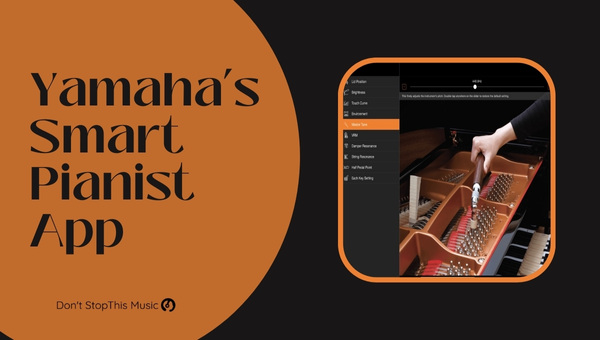
On the other hand, Yamaha P-125 users can take advantage of Yamaha’s Smart Pianist app. The app allows you to control various functions of your P-125 while also providing a range of interactive features for your practice sessions. Some highlights of the Smart Pianist app include:
- Chord analyser: The app helps you identify the chords being played in a song, making it easier for you to learn and play along.
- Play with backing tracks: Choose from an extensive library of backing tracks to practice with and develop your sense of timing and rhythm.
- Record your performance: With a simple tap, you can record your playing and listen back to evaluate your progress.
In conclusion, both the Roland FP-30 and Yamaha P-125 offer excellent complementary applications that will greatly improve your playing experience. The Roland’s Partner 2 app and the Yamaha Smart Pianist app provide seamless connectivity and various interactive features to assist you with your practice and exploration of new sounds. Make sure to take advantage of these applications to get the most out of your digital piano!
Portability and Convenience
When comparing the Roland FP-30 and the Yamaha P-125, it’s important to consider their portability and convenience. As an avid keyboard player, I’ve had hands-on experience with both of these models and can provide insights into their similarities and differences when it comes to these factors.
Firstly, let’s look at the dimensions and weight of each model. The Roland FP-30 is slightly larger and heavier than the Yamaha P-125. Here’s a breakdown of their measurements:
| Model | Width | Depth | Height | Weight |
|---|---|---|---|---|
| Roland FP-30 | 51.2″ | 11.9″ | 5.9″ | 31.1 lbs |
| Yamaha P-125 | 52.0″ | 11.6″ | 6.6″ | 26.0 lbs |
While the difference in weight isn’t significant, it may still be a factor if you’re transporting the keyboard frequently. Both models come with built-in speakers which contributes to their convenience but also adds to the overall weight.
Another important aspect of portability and convenience is the included accessories. Both keyboards come with a music rest, pedal, and power adapter. However, they differ when it comes to other accessories:
- Roland FP-30: Includes a DP-10 damper pedal, which provides more expressive control, and has Bluetooth 4.0 connectivity for use with apps and MIDI over Bluetooth.
- Yamaha P-125: Comes with a basic footswitch and has the optional LP-1 three-pedal unit, which allows for a more advanced pedal setup. Additionally, it has built-in AUX IN, USB to Host, and line-out connections.
Both models have optional stands available, but they aren’t included in the standard package.
Keyboard action is imperative for a realistic playing experience. The Roland FP-30 uses the PHA-4 Standard keyboard action, while the Yamaha P-125 features the Graded Hammer Standard (GHS) action. My personal experience leans more towards the PHA-4 keyboard on the FP-30, as it feels more natural to play and is equipped with ivory-feel keys. However, the GHS action on the P-125 provides a good experience as well.
Lastly, ease of use comes into play. Both keyboards are user-friendly, with labeled buttons and straightforward interfaces. The Roland FP-30 has a smartphone app called Piano Partner 2 for additional control and user customization, while Yamaha’s Smart Pianist app provides a similar experience for the P-125.
Taking these factors into consideration, both the Roland FP-30 and Yamaha P-125 offer a solid combination of portability and convenience. They each have their own strengths and weaknesses, so it’s essential to prioritize the factors that matter most to you when making a decision.
Price and Value for Money
In my experience, one of the primary aspects that people consider when choosing a digital piano is the price, and how it compares to the value of the product. With that in mind, I’d like to dive deep into the price and value for money aspect of the Roland FP-30 and Yamaha P-125.
Roland FP-30 has a price range of $699 to $749 depending on the retailer, which is quite common for digital pianos in its class. Some of the key features contributing to its value are:
- High-quality SuperNATURAL sound engine
- Lightweight design, perfect for portability
- Bluetooth connectivity for seamless integration with apps
- PHA-4 Standard keyboard for an authentic acoustic piano feel
On the other hand, Yamaha P-125 can be found for around $649 to $699. Its distinct features include:
- Pure CF Sound Engine for an impressive sound quality
- Slim and stylish design
- Smart features, like the Smart Pianist app
- GHS (Graded Hammer Standard) weighted action keyboard
Here’s a markdown table summarizing the key points of each piano:
| Feature | Roland FP-30 | Yamaha P-125 |
|---|---|---|
| Price | $699 to $749 | $649 to $699 |
| Sound Engine | SuperNATURAL | Pure CF Sound Engine |
| Design | Lightweight, portable | Slim and stylish |
| Connectivity | Bluetooth | Smart Pianist app |
| Keyboard Action | PHA-4 Standard | GHS weighted action |
When it comes to value for money, it’s essential to consider the features that are most important to you. For instance, if you’re looking for exceptional sound quality and a more authentic piano feel, the Roland FP-30’s SuperNATURAL sound engine and PHA-4 Standard keyboard may be worth the slightly higher price. On the other hand, if you prefer a slim design and enjoy using smart features, the Yamaha P-125 could be a better fit for your preferences and save you some money too.
Both pianos offer quality and value in their niches, making them suitable options for different people. It’s important to keep in mind that while the prices listed here are approximate, they may vary depending on the retailer and time of purchase.
Additional Accessories
When comparing the Roland FP-30 and Yamaha P-125, it’s important to consider the accessories available for each model. These additional accessories enhance the playing experience and provide extra convenience. In this section, I’m going to break down the accessories for each model, from piano stands to music rests, and more.
Let’s start with the Roland FP-30. This model comes with the following accessories:
- DP-10 Damper pedal
- AC adaptor
- Power cord
- Music rest
On top of the included accessories, there is an array of optional gear you can purchase separately. These include:
- KSC-70 custom stand
- Triple pedal unit (KPD-70)
- Carrying bag (CB-88RL)
- Keyboard stand (KS-G8B, KS-18Z, or KS-12)
- Headphones (RH-300 or RH-200)
Now, let’s take a look at the accessories for the Yamaha P-125. The package typically includes:
- A sustain pedal (FC5)
- AC adaptor
- Power cord
- Sheet music rest
Similar to the Roland FP-30, the Yamaha P-125 offers additional accessories for separate purchase. These are:
- Smart Pianist App (for iOS devices only)
- L-125 Yamaha stand
- LP-1 Yamaha 3 pedal unit
- SC-KB750 soft carrying case
- Headphones (HPE-150 or HPE-170)
Examining both models, one might notice that they offer comparable accessories. However, it’s essential to pay attention to small details like the differences in the included sustain pedals. The Roland FP-30 comes with the DP-10 damper pedal, known for its superior half-pedal functionality. Yamaha, on the other hand, includes the FC5 sustain pedal, which doesn’t offer half-pedal functionality. It’s worth noting that Yamaha P-125 users can upgrade to the FC3A pedal, which provides half-pedal support.
Another point to keep in mind is the compatibility with apps. The Yamaha P-125 features integration with the Smart Pianist App, which can be beneficial to those seeking a more interactive experience. Currently, the Roland FP-30 doesn’t offer a similar app experience.
In summary, both digital pianos provide a range of accessories tailored to each instrument. Ultimately, your choice between the Roland FP-30 and Yamaha P-125 may be influenced by the additional gear that you find most valuable for your playing style and needs. Whether you prioritize customizable stands, pedal units, or app integration, both models offer options that cater to various preferences.
Making the Final Decision
When it comes to choosing between the Roland FP-30 and the Yamaha P-125, there’s no definitive answer that fits everyone. Each of these digital pianos offers unique features and benefits, so it’s crucial to consider your personal preferences, needs, and budget. Let’s dive into the key factors that you should keep in mind while making your final decision.
Sound Quality and Expression
Proper sound quality is essential for any musician, but the type of sound you prefer may lead you towards one of these pianos over the other.
- Roland FP-30: Known for its SuperNATURAL Piano sound engine, I’ve noticed that this model provides a warm, organic, and expressive sound.
- Yamaha P-125: Thanks to its Pure CF Sound Engine, the P-125 offers a brighter, more focused, and powerful sound.
Keyboard Action and Touch Sensitivity
Both pianos have great key action, but the feel of the keys is slightly different:
- Roland FP-30: Equipped with a PHA-4 Standard keyboard, I’ve found the FP-30 to have an authentic grand piano touch with excellent responsiveness and escapement.
- Yamaha P-125: The Graded Hammer Standard (GHS) keyboard provides an authentic acoustic piano touch experience with heavier keys in the lower register and lighter keys in the higher register.
Portability and Connectivity
Portability and connectivity features may also play a significant role in your choice:
- Roland FP-30: Weighing about 31 lbs and offering Bluetooth MIDI, the FP-30 is a reliable choice if you need a portable piano with wireless connectivity.
- Yamaha P-125: Slightly lighter at 26 lbs, this piano also includes USB connectivity, making it an excellent option for those who value portability.
Budget and Additional Features
Lastly, your budget and additional features matter when selecting the right digital piano for you.
- Roland FP-30: Typically priced a bit higher than the Yamaha P-125, additional features like the Piano Partner 2 app and 128-note polyphony may justify a higher price.
- Yamaha P-125: Slightly less expensive and offering notable features such as Smart Pianist app compatibility and 192-note polyphony, this piano delivers excellent value for the cost.
It’s essential to weigh all these factors before making your final decision. It’s my hope that this in-depth analysis has aided you in choosing the digital piano that best fits your needs and preferences. Regardless of which model you select, both the Roland FP-30 and the Yamaha P-125 offer fantastic sound, touch, and features to enhance your musical journey.