
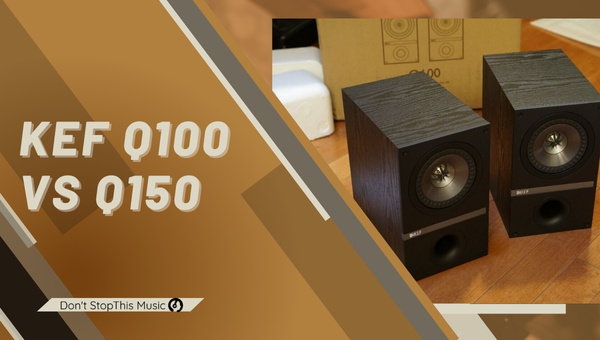
If you’re in the market for a new pair of bookshelf speakers, you’re likely to stumble upon KEF’s renowned Q series. Today, I’ll be focusing on two popular models in this series – the KEF Q100 and KEF Q150. These have become favorites among audiophiles, as they deliver top-notch sound quality at a reasonable price point. My aim is to assist you in making an informed choice between these two fantastic options.
Diving right into the differences, the KEF Q100 is an older model with a 5.25-inch Uni-Q driver array, while the KEF Q150 sports an upgraded 5.25-inch Uni-Q driver array with improved design and performance. I’ll explore the technical specifications, sound quality, and design aspects of these models in more detail, to highlight their key distinctions.
Understanding the similarities and differences between the KEF Q100 and Q150 is essential when choosing the perfect speakers for your home audio setup. Throughout the comparison, I’ll provide objective evaluations to help determine which model is best suited for your specific needs and preferences. So, let’s get started and delve deeper into the world of KEF bookshelf speakers.
Table of Contents
A Brief Overview of KEF Q100 and Q150
As a speaker enthusiast and blogger, I’ve had the pleasure of testing out many different speaker models, including the KEF Q100 and KEF Q150. Both of these bookshelf speakers have made their mark in the audio world, and in my experience, they have a lot to offer. In this section, I’ll give you a brief overview of these two popular models, looking at their key features, design, and what sets them apart from each other.
The KEF Q100 is a two-way bass-reflex bookshelf speaker, which was a popular choice for many audio geeks, myself included. It features a 5.25-inch aluminum Uni-Q driver array, which is a standout among its contemporaries. The Q100 is known for its exceptional sound quality and detailed imaging, thanks to its unique driver design. Some of the main features include:
- 5.25-inch aluminum Uni-Q driver array
- 49Hz – 40kHz frequency response
- 86dB sensitivity
- 8 ohms nominal impedance
On the other hand, the KEF Q150 is an updated version of its older sibling, the Q100. It brings subtle improvements and refinements to the table, making it a worthy successor. I noticed that the Q150 has a 5.25-inch aluminum Uni-Q driver as well, but with an updated version, which results in more accurate audio reproduction. Here are some key features of the Q150:
- 5.25-inch aluminum Uni-Q driver array (updated)
- 51Hz – 28kHz frequency response
- 86dB sensitivity
- 8 ohms nominal impedance
| Feature | KEF Q100 | KEF Q150 |
|---|---|---|
| Driver | 5.25-inch aluminum (Uni-Q) | 5.25-inch aluminum (Uni-Q, updated) |
| Frequency | 49Hz – 40kHz | 51Hz – 28kHz |
| Sensitivity | 86dB | 86dB |
| Impedance | 8 ohms | 8 ohms |
One noticeable difference between the Q100 and Q150 is the position of the Uni-Q driver, which is now centrally placed on the baffle in the newer model. In my experience, this seemingly minor shift has an impact on the overall sound reproduction, making it more balanced and coherent.
Another aspect worth mentioning is the cabinet design. Both models have similar dimensions, but the Q150 benefits from a more rounded cabinet front baffle, which helps minimize diffraction.
In summary, both KEF Q100 and Q150 have a lot to offer in terms of sound quality and design features. While the Q100 was a go-to speaker for many, the Q150 has managed to make improvements on its predecessor, earning itself a place in the world of top-notch bookshelf speakers as well.
Design Differences
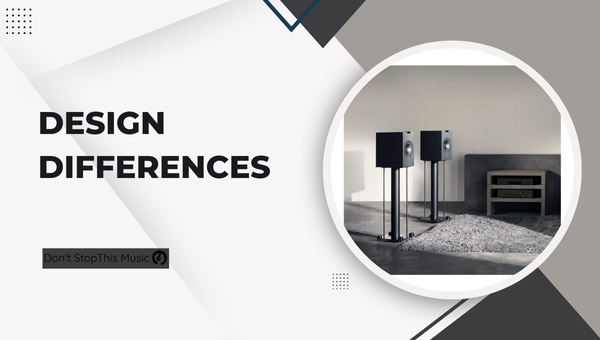
Among the many factors to consider, the design differences between the KEF Q100 and Q150 speakers are something I’ve had firsthand experience with. I’ll walk you through these differences, highlighting what sets them apart.
First, let’s discuss the size of these two speakers. The Q100 dimensions are slightly smaller, measuring 11.8 x 7.1 x 10.7 inches. On the other hand, the Q150 measures 11.9 x 7 x 10.6 inches. While the difference in size is minimal, it’s important to recognize if you’re working with limited space.
| Speaker | Dimensions |
|---|---|
| Q100 | 11.8 x 7.1 x 10.7 inches |
| Q150 | 11.9 x 7 x 10.6 inches |
Another key difference is the driver positioning on both models. The Q100 features a coaxial layout with the tweeter placed at the center of the mid-woofer, making it a point-source* speaker. In contrast, the Q150 uses an offset layout design, as the tweeter is positioned above the mid-woofer. This layout improvement helps to reduce unwanted reflections and enhance the three-dimensional sound image.
A third noticeable variation lies in the baffle design. While the Q100 sports a traditional convex baffle, the Q150 is equipped with a New Enhanced Computational Fluid Dynamics (CFD) port. This design improvement enhances the port airflow, reducing turbulence, and in turn, providing a cleaner bass response.
Regarding the finishes available, both speakers offer a similar range:
- Black Ash
- White
- Walnut
However, the Q100 also comes in a Rosewood finish, making it a touch more versatile for those seeking a wider variety of design options.
Lastly, let’s talk about the Uni-Q Driver Array technology. Both speakers utilize this unique design, which combines the tweeter and mid-woofer into a single unit. The main difference between the two models is the generation of the driver array. The Q150 has an improved 5.25-inch Uni-Q Driver Array resulting in a higher performance output and improved off-axis response.
In summary, the KEF Q100 and Q150 hold their unique design elements, which set them apart. The most notable differences are driver positioning, baffle design, and Uni-Q Driver Array generation, each impacting the overall performance and sound quality. With all this information at hand, you’ll be better equipped to make a well-informed decision in choosing between these two exceptional speakers.
Technical Specifications Comparison
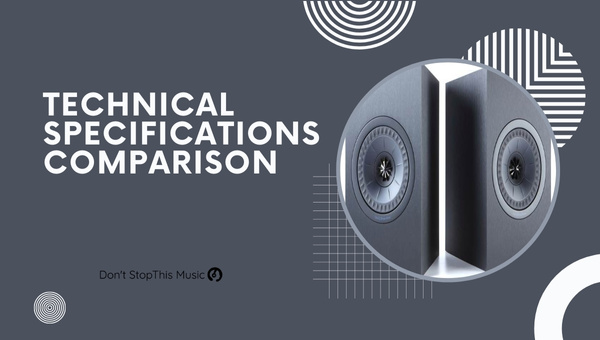
When comparing the KEF Q100 and KEF Q150, there are several key technical specifications that I’ll be discussing. Both speakers come highly recommended, but knowing these specifications will help you make the best choice for your audio setup.
First, let’s focus on the drivers found in each speaker. The Q100 features a 5.25-inch Uni-Q driver array, while the Q150 has a slightly larger 5.5-inch version. This difference in size allows the Q150 to produce more powerful and clearer audio.
Next, the frequency response of the two speakers differs slightly. The Q100 has a range of 49Hz to 40kHz, while the Q150 has a range of 47Hz to 28kHz. Though the Q150 has a better low-frequency response, the Q100 has a wider overall range, which may appeal to those looking for excellent high-frequency clarity.
The sensitivity of each speaker is essential to consider as well. The Q100 boasts a sensitivity of 86dB, while the Q150 comes in at 86.5dB. This slight difference means the Q150 can effectively produce louder audio without requiring additional amplifier power.
Another crucial detail is the impedance of each speaker. Both the Q100 and Q150 have a nominal impedance of 8 ohms, making them compatible with most home audio setups.
| Specification | KEF Q100 | KEF Q150 |
|---|---|---|
| Driver Size | 5.25-inch | 5.5-inch |
| Frequency Response | 49Hz – 40kHz | 47Hz – 28kHz |
| Sensitivity | 86dB | 86.5dB |
| Impedance | 8 ohms | 8 ohms |
Additional factors to consider when comparing these two speakers include:
- Weight: The Q100 has a weight of 12.3lbs, while the Q150 comes in slightly heavier at 12.8lbs.
- Dimensions: The Q100 measures 11.8 x 7 x 10.7 inches, while the Q150 measures 11.9 x 7.3 x 10.9 inches. They are quite similar in size, but the Q150 is slightly larger.
- Cabinet Design: Both speakers feature a similar cabinet design, but the Q150 has a newer design with a sleeker appearance and rounded edges.
In summary, understanding the technical specifications is vital when choosing between the KEF Q100 and Q150. By comparing the driver size, frequency response, sensitivity, and impedance, you can make an informed decision that best suits your audio requirements. No matter which speaker you choose, you’re in for an enjoyable listening experience.
Audio Performance: Sound Quality
Listening to the KEF Q100 and KEF Q150, I noticed some differences in their audio performance, particularly in the areas of bass response, soundstage width, and detail retrieval. To give you an idea, let’s delve into the specifics of each speaker’s sound quality through a series of comparisons and insights.
Bass Response
- The KEF Q100 has a decent bass response but it’s not as deep and tight as the Q150. The Q150’s bass performance proves to be more impactful and satisfying, especially in the lower frequencies.
- Despite the slightly weaker bass response, the Q100 still offers enjoyable audio with good overall balance and presence.
Soundstage Width
- The KEF Q150 has a larger and more immersive soundstage compared to the Q100. With better speaker positioning, the Q150’s soundstage expands even further, enhancing the overall listening experience.
- Although smaller, the Q100’s soundstage is still sufficiently wide for immersive audio. However, in a side-by-side comparison, the Q150 easily outshines its counterpart.
Detail Retrieval
- When it comes to detail retrieval, the Q150 excels in extracting subtle nuances and micro-details within music tracks. As a result, the listener’s experience is enriched with intricate layers of sound.
- The Q100 isn’t far behind, but its performance in detail retrieval is slightly less impressive compared to the Q150.
To highlight the key points, I’ll provide a summary of each speaker’s strengths in a simple markdown table:
| Speaker | Strengths |
|---|---|
| KEF Q100 | Good overall balance, enjoyable audio, wide soundstage |
| KEF Q150 | Deeper bass response, immersive soundstage, better detail retrieval |
Considering their differences in audio performance, it’s evident why listeners face a challenge when choosing between the KEF Q100 and Q150. The Q150 wins with regards to bass response, soundstage width, and detail retrieval, but the Q100 remains a respectable contender in the realm of sound quality. No matter the choice, both speakers deliver a pleasurable listening experience, as expected from the renowned KEF brand.
Setup and Room Compatibility
When it comes to setting up the KEF Q100 and Q150 speakers, I found that both models are relatively easy to integrate into a room. The compact and sleek design of these bookshelf speakers allows them to easily fit into most home decors, with a few minor differences between the models that may influence your decision.
One aspect that plays a significant role in speaker performance is room size. It’s important to understand how these two models fare in different room sizes:
- For small to medium-sized rooms, the Q100 delivers an ample punch and accurate sound reproduction.
- In larger rooms, the Q150’s updated driver and crossover design provide a more expansive soundstage and better overall performance.
In addition to room size, the placement of these speakers also affects their performance. Here are some tips for optimizing their output:
- Position both speakers at least 6 to 10 inches away from any wall to prevent bass buildup.
- To achieve a proper stereo image, angle the speakers towards the listening position and maintain an equal distance between them.
The Q100 has a front-ported design, meaning that the speaker’s bass port is located on the front panel. This provides better flexibility for speaker placement, allowing for placement closer to walls without heavy bass reinforcement. On the other hand, the Q150 features a rear-ported design which requires more space from the wall for optimal bass performance.
It’s worth mentioning that both speaker models have options for wall-mounting, but this might not be the best choice. Wall-mounting can cause sound to reflect off the wall, leading to decreased audio quality. For the best listening experience, I recommend placing the speakers on a sturdy stand or shelf.
To summarize, both the KEF Q100 and Q150 speakers offer an excellent balance of performance and ease of setup. Carefully consider your room size, speaker placement, and port design before committing to one model over the other.
| Model | Room Size | Port Design |
|---|---|---|
| Q100 | Small to medium-sized rooms | Front-ported |
| Q150 | Larger rooms | Rear-ported |
Speaker Placement and Orientation
When it comes to speaker placement, it’s crucial to strike the right balance for optimal sound quality. In my experience, both the KEF Q100 and Q150 have specific needs in terms of position and orientation, so let’s dive into the details.
For the KEF Q100, these speakers should be placed at least 7.9 inches (20 cm) away from walls or any large surface for the best sound performance. This helps to minimize early reflections and potential standing waves. Using speaker stands will provide optimal listening height as well. Aim to position them at ear level or slightly higher when seated.
Here are some key tips for Q100 placement:
- Angle the speakers inward to create a focused soundstage
- Aim for an equilateral triangle formation with your listening position
- Add absorptive materials like foam or acoustic panels in your room to minimize reflections
On the other hand, the KEF Q150, with its rear-ported design, requires a little more planning in regards to rear-wall distance. Allow at least 19.7 inches (50 cm) of space between the back of the speaker and any large surface for optimum bass performance.
Some valuable advice for Q150 placement includes:
- Distance from sidewalls should be about 3 feet (Be mindful of room dimensions)
- Angle the speakers, making sure the listener is at the vertex of the triangle they form
- Use a rug, curtains, or soft furniture to lessen unwanted reflections
The orientation of the speakers is also essential, especially for the KEF Q100. These coaxial speakers can be placed either vertically or horizontally. However, it’s important to keep their tweeter and woofer alignment consistent. Whichever orientation you choose, make sure both speakers match.
As for the KEF Q150, these should be positioned vertically for the best performance. Ensure the “Uni-Q” logo on the front is right side up, with the tweeter at the top and woofer at the bottom.
Taking the time to optimize your speaker placement and orientation is worth the effort. When set up correctly, both the KEF Q100 and Q150 models will deliver exceptional sound experiences.
Price
Pros and Cons of KEF Q100
In my experience with the KEF Q100 speakers, I’ve observed several pros and cons that stand out. In this section, I’ll share these findings to help you make an informed decision when choosing between the KEF Q100 and Q150 speakers.
Let’s start with the pros. First and foremost, the sound quality of the Q100 speakers is exceptional in their price range. They deliver a remarkably balanced and natural sound, with detailed midrange and treble frequencies. Their two-way bass reflex design combines a 5.25-inch Uni-Q driver and a 1-inch aluminum dome tweeter, which together produce crisp, precise audio.
Even better, the Q100’s compact size makes them incredibly versatile. They’re suitable for various applications, be it for a home theater system, desktop computer setup, or a small room. The compactness of the Q100 allows you to easily place them on shelves or stands without disrupting your space.
Now, let’s take a look at the Q100’s cons:
- Lacking deep bass: Although the KEF Q100 speakers deliver a detailed sound overall, they can sometimes lack in the low bass region. If you’re someone who loves powerful bass, you might need to add a separate subwoofer to your setup.
- Discontinued model: As the Q150 has replaced the Q100, it might be harder for you to find a brand new Q100 in stock. However, you can still find used or refurbished units.
- Plain aesthetics: The Q100 speakers have a simple, unassuming design. While this is not a major concern for many users, some might prefer a more distinct or stylish speaker appearance.
Below, I’ve laid out a quick summary of the pros and cons of the KEF Q100 speakers:
| PROS | CONS |
|---|---|
| Exceptional sound quality | Lacking deep bass |
| Compact and versatile | Discontinued model |
| Cost-effective | Plain aesthetics |
- KEF Q100 is an excellent option for those who prioritize sound quality and versatility. While they may lack deep bass and a cutting-edge design, their performance and compactness more than make up for these shortcomings. By being aware of these pros and cons, you’ll be better equipped to decide if the KEF Q100 is the right choice for your audio needs.
Pros and Cons of KEF Q150
When it comes to the KEF Q150, there are several pros and cons to consider. As an experienced user of these speakers, I can confidently share my thoughts on what makes the Q150 stand out, as well as some areas where it might fall short.
Sound Quality: The most significant advantage of the KEF Q150 is its exceptional sound quality. It boasts a well-balanced audio profile with a clear and articulate high-end, a solid midrange, and a deep, controlled bass response. This is thanks to KEF’s Uni-Q driver array technology, which improves sound dispersion and performance.
Build Quality and Design: Another essential feature of the Q150 is its robust build quality and attractive design. The speakers are constructed with high-quality materials and sturdy cabinets, ensuring that they can withstand the test of time. With their minimalist design and compact size, the Q150 speakers will blend seamlessly into any room layout.
Easy to Set Up: The KEF Q150 speakers are effortless to set up, making them perfect for those who are not tech-savvy. The speakers come with straightforward instructions to connect to your amplifier or receiver so you can start enjoying the impressive sound quality right away.
Now, let’s look at some of the cons of the KEF Q150:
Price: One potential drawback of the KEF Q150 is its price. The speakers are on the upper end of the budget category, which may deter some potential buyers. However, considering the quality and performance they provide, many may find that the additional cost is well worth it.
Size and Weight: While the size and design of the Q150 are advantageous for blending into most room layouts, it’s essential to note that they may be too large for some users with limited space. Additionally, with their weight of approximately 12.3 pounds each, they may be difficult to move or reposition for some individuals.
Lacks a Grille: The Q150 speakers do not come with a grille, leaving the Uni-Q driver array exposed. For some users, this might be a disadvantage aesthetically, or they may be concerned about potential damage to the drivers. However, KEF does offer separate grilles for purchase if desired.
So, there you have it! These are the pros and cons of the KEF Q150 speakers that I’ve experienced during my time with them. While no speaker is perfect, it’s crucial to weigh these factors carefully and consider what’s most important to you when deciding whether the Q150 is the right choice.
Conclusion: Which One Is Right for You?
Both the KEF Q100 and Q150 speakers have their own set of distinct features and advantages, making the decision a challenging one. Ultimately, your choice will come down to your specific needs, budget, and personal preferences.
When it comes to the Q100, its strengths lie in its affordability, compact size, and wide sound dispersion. If you’re on a tight budget or have limited space, these speakers could be the perfect choice. Some key points of the Q100 are:
- Affordable
- Compact size
- Wide sound dispersion
On the other hand, the Q150 boasts significant improvements in sound quality and bass response due to its larger driver and improved cabinet design compared to its predecessor. Furthermore, the Q150’s revamped crossover components result in a smoother, more refined sound signature. These are some features you can expect from the Q150:
- Upgraded sound quality and bass response
- Redesigned cabinet and driver
- Refined sound signature
So, which one should you choose? If budget and space are your primary concerns, the KEF Q100 is still an amazing option. However, if you’re willing to invest a bit more for better sound quality, bass response, and overall performance upgrades, the Q150 may be well worth the additional cost.
Ultimately, the decision is yours, and no matter which one you choose, both speakers can provide you with an impressive listening experience. Just be sure to consider your individual needs and preferences, and you’ll be on your way to enjoying your favorite tunes, movies, or games with exceptional sound quality.