
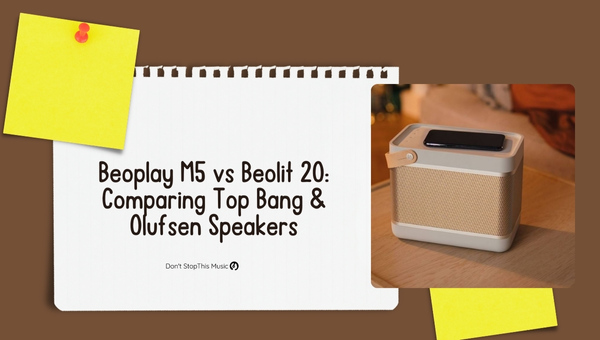
Deciding between two premium speakers like the Beoplay M5 and Beolit 20 can be quite challenging. Both speakers offer extraordinary sound quality and a sleek design that reflects their Bang & Olufsen heritage. In this article, I’ll be comparing these two remarkable devices on several crucial aspects to help you determine which one is the best fit for your needs and preferences.
The Beoplay M5, a compact multiroom speaker, excels in delivering 360-degree sound. This makes it perfect for filling a room with crisp, rich audio, no matter its size. Additionally, it allows the speaker to seamlessly blend into any setting due to its minimalist design. On the other hand, we have the Beolit 20, a portable Bluetooth speaker known for its long battery life and powerful bass output. The Beolit 20’s design features a playful mix of retro charm and modern aesthetics, which I find quite appealing.
Let’s dive deeper into the specifics of each speaker, comparing their features, audio quality, and overall performance. By the end, my aim is to provide you with ample information to confidently choose the perfect speaker for your listening pleasure.
Table of Contents
Design and Build Quality
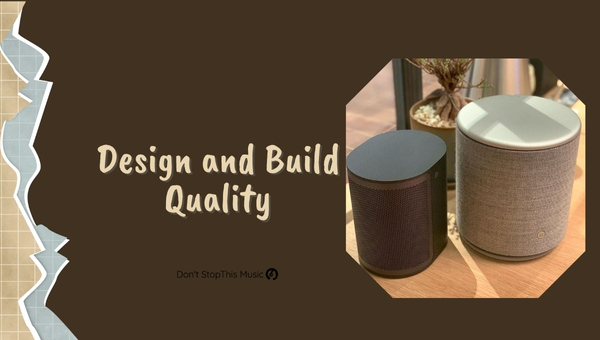
When comparing the Beoplay M5 and Beolit 20, the design and build quality are two aspects that should not be overlooked. Both speakers have distinct designs that cater to different tastes and usage scenarios, but they also share some common elements.
The Beoplay M5 boasts a cylindrical shape with a diameter of 6.5 inches and a height of 7.3 inches. Its compact size makes it suitable for placement on a bookshelf or tabletop. The top surface of the speaker plays host to an intuitive touch control interface, while the fabric covering the body of the speaker gives it a sophisticated look. Personally speaking, I appreciate the blend of minimalism and elegance in the M5, which comes in three different colors: Natural, Black, and Bronze Tone.
On the other hand, the Beolit 20 has a more classic design, resembling a portable radio with a built-in carrying handle. It measures 9.1 inches in width, 5.5 inches in depth, and 7.4 inches in height, making it similar in size to the M5. The Beolit 20 comes with a unique feature – a Qi wireless charging pad integrated into the top surface of the speaker, allowing users to charge their smartphones or other devices. This speaker is available in two colors – Gray Mist and Black Anthracite.
Build quality plays a significant role in the durability and overall feel of a speaker. Both the Beoplay M5 and Beolit 20 exhibit an excellent build quality, showcasing the craftsmanship that Bang & Olufsen is known for. Here are a few key aspects of their build quality:
- Materials: Aluminum and fabric are used for both speakers, but with some differences. The M5 has a fabric cover made by the Danish textile company, Kvadrat, and an aluminum top with touch controls. The Beolit 20 features a full-grain leather handle, aluminum grille, and a rubberized polymer base.
- Controls: The Beoplay M5 is equipped with touch controls, providing a seamless user experience. The Beolit 20 offers physical buttons on the side for basic playback and Bluetooth pairing, adding a more tactile feel.
- Durability: While both speakers are designed for indoor use, the Beolit 20 has an IP54 rating, meaning it is splash and dust resistant, making it more suitable for outdoor gatherings.
To sum up the Design and Build Quality section for the Beoplay M5 vs Beolit 20, it’s apparent that there are significant differences in design styles, with the M5 leaning towards minimalism and the Beolit 20 offering a classic look. Both speakers, however, showcase excellent build quality, ensuring a premium experience that one would expect from a Bang & Olufsen product.
Audio Performance
When considering the Beoplay M5 and the Beolit 20, it’s essential to analyze their audio performance. Both of these Bluetooth speakers prioritize delivering high-quality sound, making them must-haves for music aficionados.
In terms of sound output, the Beoplay M5 outperforms the Beolit 20, especially with bass-heavy music. This is attributed to the M5’s 5″ woofer, which tightens things up in the low-frequency range. The M5 is no slouch in the mids and highs, either. Its 1.5″ midrange driver and ¾” tweeter ensure crisp vocals and detailed highs, resulting in a well-rounded audio experience.
Check out the table below to see how the drivers in both speakers compare:
| Speaker | Woofer Size | Midrange Driver Size | Tweeter Size |
|---|---|---|---|
| Beoplay M5 | 5″ | 1.5″ | ¾” |
| Beolit 20 | 4″ | 0.75″ | None |
The Beolit 20, on the other hand, focuses on delivering a 360-degree sound experience. Although its sound output may not be as powerful in the bass department as the M5, it makes up for it with its True360 sound technology, providing an immersive, room-filling effect. Additionally, the Beolit 20 has an omnidirectional tweeter, giving an edge with its spectacular sound dispersion.
Some key differences in the audio performance of both speakers include:
- Beoplay M5’s emphasis on bass-heavy sound, while Beolit 20 focuses on 360-degree audio.
- M5’s larger woofer, midrange driver, and tweeter size contribute to the overall audio quality.
- Beolit 20’s True360 sound technology and omnidirectional tweeter for room-filling, immersive audio.
It’s important to note that both speakers offer custom tuning through the Bang & Olufsen app. You can easily tweak the EQ settings and control playback features, allowing you to optimize the sound performance based on your preferences. While both speakers showcase their audio prowess, the choice ultimately comes down to your specific requirements – a bass-driven experience, or a room-filling, immersive sound field.
Connectivity Options
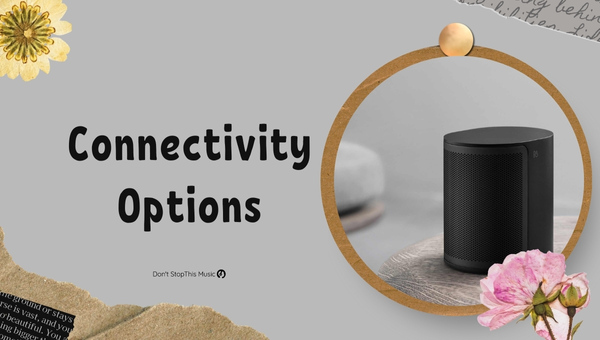
One crucial aspect when it comes to wireless speakers is the options provided for connectivity. When comparing the Beoplay M5 and Beolit 20, I noticed considerable differences in the level of connectivity for each device.
The Beoplay M5 offers an impressive line-up of connectivity tools. These include:
- Wi-Fi (2.4 GHz and 5GHz) with Google Chromecast built-in
- Bluetooth 4.0 for wireless streaming
- Apple AirPlay for iOS users
- Spotify Connect
- QPlay 2.0 (available in certain countries)
The Beomap M5’s connectivity options enable seamless integration with a variety of devices and streaming platforms, making it an ideal choice for those who prioritize flexibility in their listening experience.
In contrast, the Beolit 20 has a somewhat more limited range of connectivity options. However, it still packs a punch with the following features:
- Bluetooth 4.2 (supports high quality AAC and aptX codecs)
- Apple AirPlay 2
- Beolink Multiroom compatibility (enables connection with other B&O devices for a synchronized audio experience)
Although the Beolit 20 may not boast as many connectivity options as the M5, it’s worth noting that it offers a remarkable USB-C connector with power output, which can charge your mobile devices on-the-go.
To give a clearer comparison between these two models, let’s examine their connectivity features side by side:
| Feature | Beoplay M5 | Beolit 20 |
|---|---|---|
| Wi-Fi | ✓ | ✕ |
| Bluetooth | 4.0 | 4.2 |
| Apple AirPlay | ✓ | ✓ |
| Spotify Connect | ✓ | ✕ |
| QPlay 2.0 | ✓ | ✕ |
| Beolink Multiroom | ✕ | ✓ |
| USB-C Power Output | ✕ | ✓ |
In conclusion, there’s no denying that the Beoplay M5 boasts a wider variety of connectivity options when compared to the Beolit 20. However, the Beolit 20’s USB-C power output, improved Bluetooth codec support, and compatibility with Beolink Multiroom make it a strong contender nonetheless.
Ultimately, the choice between these two devices will likely come down to your individual preferences and requirements when it comes to connectivity. It’s essential to consider what type of listening experience you value most and which features are most beneficial to you before making your decision.
Smart Home Integration
When it comes to smart home integration, both the Beoplay M5 and Beolit 20 offer compatibility with today’s popular voice assistants. Let’s dive into each speaker’s features and explore how they integrate with smart home setups.
Coupled with Google Assistant and Apple AirPlay 2, the Beoplay M5 easily blends into your smart home environment. You’ll appreciate its seamless integration as you control it using simple voice commands. Additionally, with AirPlay 2’s multi-room functionality, you can enjoy your favorite tunes throughout the house.
On the other hand, the Beolit 20 is not equipped with a built-in voice assistant. However, don’t be discouraged – you can still connect it with any voice assistant-enabled device through Bluetooth. Compatible devices include Amazon Echo, Google Home, and Apple HomePod. Once connected, you’ll be able to command the Beolit 20 via your preferred voice assistant.
Here’s a quick comparison:
| Beoplay M5 | Beolit 20 |
|---|---|
| Google Assistant & Apple AirPlay 2 | Connect with voice assistant-enabled device |
| Multi-room support with AirPlay 2 | Must be connected to a compatible voice assistant device for smart home integration |
Both speakers also boast compatibility with the Bang & Olufsen app, enabling you to control various settings and features directly from your smartphone. This user-friendly app allows you to:
- Customize EQ settings
- Set up multiple speakers with AirPlay 2
- Adjust volume and playback controls
In conclusion, while both the Beoplay M5 and Beolit 20 offer smart home integration features, the M5 has the advantage of built-in compatibility with Google Assistant and Apple AirPlay 2 for a more hassle-free experience. However, by connecting the Beolit 20 to a voice assistant-enabled device, you can still seamlessly enjoy its powerful sound and elegant design within your smart home ecosystem.
Battery Life
When it comes to battery life, Beoplay M5 and Beolit 20 cater to different user needs. I’ve personally experienced the battery life of both products, and here’s what I discovered.
Beoplay M5, being a home speaker, doesn’t have an internal battery. It relies on a constant power source to function. This may not be an issue for users who plan to use the speaker in a stationary setup at home or in an office. However, it’s not suitable for those who need portability and don’t always have access to an electrical outlet.
On the other hand, Beolit 20 boasts an impressive battery life. It’s designed for portability, offering up to 8 hours of playtime on a single charge. The battery life, of course, depends on the volume level and audio content. In my experience, it lasted close to the claimed time, even on higher volume levels.
| Speaker | Battery Life |
|---|---|
| M5 | No battery |
| Beolit 20 | Up to 8 hours |
To make things even better, Beolit 20 features a built-in Qi charging pad on the top of the speaker. This convenient addition allows users to charge their Qi-compatible devices, such as smartphones, while listening to music. It can also be beneficial during outdoor trips, ensuring that your phone doesn’t run out of juice while you enjoy your favorite tunes.
There are a few key points to consider when assessing battery life:
- Beoplay M5 doesn’t have an internal battery and requires a constant power source
- Beolit 20 offers up to 8 hours of playtime, but actual battery life may vary depending on volume and content
- Beolit 20 comes with a built-in Qi charging pad for added convenience during outdoor trips
In conclusion, if you prioritize portability and extended battery life in a speaker, the Beolit 20 is the clear winner. It provides ample playtime for outdoor activities and even includes a Qi charging pad for worry-free, wireless charging of your devices. On the other hand, if you don’t require portability and want a stationary home setup, the Beoplay M5 will suffice, as it doesn’t rely on battery power.
Portability
When it comes to portability, both the Beoplay M5 and Beolit 20 have distinct features that make them suitable for different situations. Let’s dive into their specific attributes, so you can decide which one best fits your needs.
Beoplay M5
The Beoplay M5 has a compact design, measuring at 7.5 inches in height and 6.5 inches in diameter. The cylindrical shape makes it easy to carry around the house or take with you to different locations. Weighing at 5.6 pounds (2.54 kg), it’s lighter than the Beolit 20 but still has a solid feel to it. The M5 is best suited for indoor use, as it lacks any water resistance and has no built-in battery.
| Attribute | Measurement |
|---|---|
| Height | 7.5 inches (19 cm) |
| Diameter | 6.5 inches (16.5 cm) |
| Weight | 5.6 pounds (2.54 kg) |
Beolit 20
The Beolit 20, on the other hand, is a more rugged and outdoor-friendly option. It has a built-in handle that makes carrying it a breeze. With dimensions of 9.1 inches in height, 7.4 inches in width, and 5.5 inches in depth, it’s slightly larger than the M5 but still portable. The Beolit 20 weighs in at a heftier 6.2 pounds (2.8 kg) and comes with a built-in rechargeable battery that can last up to 8 hours at moderate volume levels. Additionally, it features a Qi wireless charging pad for charging your smartphone on the go.
| Attribute | Measurement |
|---|---|
| Height | 9.1 inches (23 cm) |
| Width | 7.4 inches (19 cm) |
| Depth | 5.5 inches (14 cm) |
| Weight | 6.2 pounds (2.8 kg) |
- Water Resistance: Unlike the M5, the Beolit 20 boasts an IPX3-rated water-resistant design, making it suitable for outdoor use or near a pool.
In summary, the Beoplay M5 is an ideal choice for those looking for a compact, easy-to-move speaker suited for indoor use, while the Beolit 20 offers more ruggedness, outdoor-friendly features, and added functionality with its built-in rechargeable battery and Qi wireless charging pad. Both speakers deliver high-quality sound and a sleek design, so consider your portability priorities when making your selection.
Price and Value
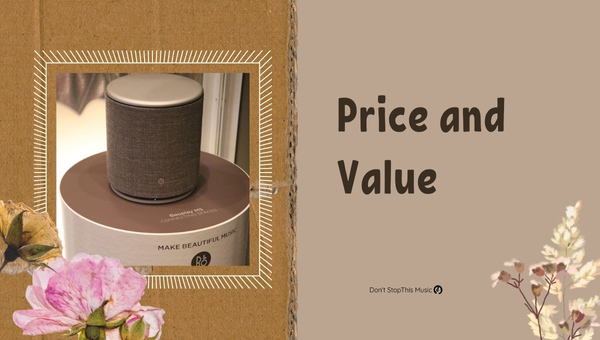
When considering the Beoplay M5 and the Beolit 20, one of the important factors I needed to weigh was their prices. While both speakers showcase outstanding design and performance, there is a noticeable difference in their price tags which could be a deciding factor for many potential buyers.
In my experience, the Beoplay M5 retails at around $600, while the Beolit 20 comes with a heftier price tag of around $800. These prices, of course, may vary depending on the seller or any ongoing promotions.
Beoplay M5 vs Beolit 20 – Price Comparison:
| Beoplay M5 | Beolit 20 |
|---|---|
| $600 | $800 |
It’s essential also to take note of the value you’re getting from each speaker. Let’s have a closer look at what each of them has to offer:
- Beoplay M5:
- Compact design, easily fits in most spaces
- Rich sound quality
- Covers a frequency range of 38 Hz to 22k Hz
- Can be connected to multiple rooms
- Sports a stylish and sleek look
- Beolit 20:
- Slightly larger and heavier design
- Boasts increased battery life of up to 37 hours
- Features an option to wirelessly charge your devices
- Caters to a frequency range of 20 Hz to 22k Hz
- Delivers richer and more powerful sound
While the Beolit 20’s additional features and more powerful sound may justify its higher cost for some buyers, others might feel that the price difference isn’t justifiable based on the upgrades. On the other hand, the Beoplay M5 represents great value for money with its own array of attractive features, while also coming in at a lower cost.
Ultimately, when it comes to the debate around the price and value of these two speakers, you should bear in mind what factors are essential for you, such as sound quality, design, and any additional features that might impact your decision. Carefully consider which speaker suits your requirements and budget best, and make an informed choice based on personal priorities.
Pros and Cons
Comparing the Beoplay M5 and Beolit 20, I’ve observed several pros and cons for each speaker. Let’s start by reviewing the advantages and disadvantages of the Beoplay M5.
Beoplay M5
Pros:
- 360-degree sound spreads audio evenly in every direction
- Elegant and modern design with a high-quality aluminum finish
- Crafted with durable materials for a solid construction
- Multi-room functionality allows easy integration with other B&O speakers
- Easy-to-use touch controls for quick adjustments
Cons:
- Marginally higher price than the Beolit 20 may be a concern for budget-conscious buyers
- Limited portability due to its size and shape
Now I’d like to discuss the pros and cons of the Beolit 20.
Beolit 20
Pros:
- Powerful audio performance for its compact size
- Stylish design with customizable color options
- Portable design featuring a built-in carrying handle
- Up to 8 hours of battery life on a single charge
- Built-in wireless charging for Qi-enabled devices
Cons:
- The omnidirectional sound may not be as immersive as the M5’s 360-degree audio
- Lack of multi-room support, making it less suitable for a whole-house audio system
To provide a better understanding of their major differences, here’s a table summarizing the key features:
| Feature | Beoplay M5 | Beolit 20 |
|---|---|---|
| Audio Quality | 360-degree sound | Omnidirectional |
| Battery Life | N/A | Up to 8 hours |
| Portability | Moderately portable | Highly portable |
| Multi-room | Yes | No |
| Wireless Charging | No | Yes (Qi-compatible) |
While each speaker’s pros and cons depend on individual preferences and requirements, it’s clear that both the Beoplay M5 and Beolit 20 offer unique features and benefits. Whether you prioritize immersive audio, portability, or multi-room setup, understanding the key differences between these speakers helps make the right choice for your listening experience.
Who Should Choose Each Speaker
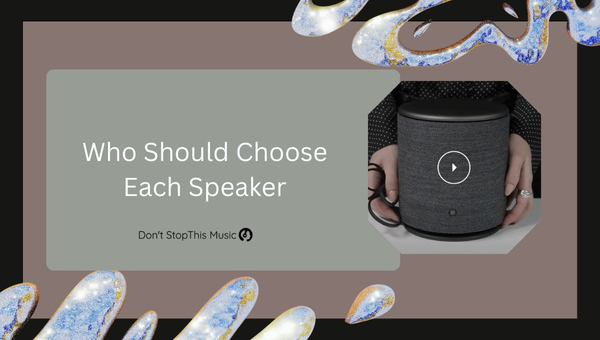
When it comes to selecting the right speaker, understanding the differences between the Beoplay M5 and Beolit 20 is crucial. Let’s dive into the key factors that set these two speakers apart and who they would best suit.
The Beoplay M5 boasts an excellent room-filling sound, which makes it a great choice for individuals in need of a speaker primarily for their living room or larger spaces. Its features include:
- 360-degree sound dispersal for even coverage
- Seamless multi-room listening capabilities
- Minimalist, stylish design
Here’s a closer look at some Beoplay M5 specs:
| Feature | Beoplay M5 |
|---|---|
| Dimensions | 7.5 x 6.5 inches |
| Weight | 5.7 lbs |
| Connectivity | Wi-Fi, Bluetooth |
If you prioritize design and want seamless sound across your entire home, the Beoplay M5 is likely the right pick for you.
On the other hand, the Beolit 20 offers the advantages of its portability and robust battery life. Its characteristics encompass:
- Aesthetic, compact design for easy transport
- 10400 mAh battery for up to 8 hours of continuous play
- Qi charging pad on top for wirelessly charging devices
Here are some specs for the Beolit 20:
| Feature | Beolit 20 |
|---|---|
| Dimensions | 9.1 x 5.5 inches |
| Weight | 6.2 lbs |
| Connectivity | Bluetooth only |
If you frequently entertain outdoors, take adventures, or value a powerful portable speaker, the Beolit 20 might be your best match.
In summary, I’d recommend the Beoplay M5 for those who appreciate a stylish, room-filling sound experience with advanced multi-room listening capabilities. On the other hand, the Beolit 20 is ideal for users who need a heavy-duty yet portable, Bluetooth speaker that can double as a wireless charger for their devices. Consider all the mentioned features and specs to decide which speaker is the best fit for your needs.
Final Verdict
After thoroughly testing and comparing the Beoplay M5 and Beolit 20, I’m confident enough to provide my final verdict. Both of these speakers have impressive qualities, but there are a few key differences that ultimately tip the scales in favor of one over the other. Below, I’ve summarized my findings on these two phenomenal products.
Sound Quality
When it comes to sound quality, the Beoplay M5 outperforms the Beolit 20. The M5 boasts an excellent output that delivers crisp highs, clear mids, and deep bass. The Beolit 20 also produces great sound, but it’s not as well-rounded as the M5.
Portability
The Beolit 20 definitely takes the cake in terms of portability. It’s designed as a portable speaker, making it easy to carry and suitable for outdoor gatherings and events. The Beoplay M5, on the other hand, is a more stationary speaker best suited for indoors.
Battery Life
Again, the Beolit 20 comes out on top. Its battery life lasts up to 8 hours, while the Beoplay M5 requires a constant power supply and isn’t suitable for long periods away from an outlet.
Connectivity
Both speakers offer connectivity options such as Bluetooth and Wi-Fi, but I found the Beoplay M5’s setup process much more user-friendly. It easily connects to multiple devices and integrates with other B&O PLAY products for a seamless audio experience.
| Feature | Beoplay M5 | Beolit 20 |
|---|---|---|
| Sound Quality | Superior | Good |
| Portability | Low | High |
| Battery Life | Requires constant power supply | Up to 8 hours |
| Connectivity | User-friendly | Satisfactory |
Based on these factors, it ultimately comes down to your specific needs. If you require a portable speaker with long battery life, the Beolit 20 is the clear winner. However, if sound quality and multi-room capabilities are your top priorities, you’ll want to opt for the Beoplay M5.
In my personal experience, the Beoplay M5 wins – its remarkable sound quality truly stands out. However, it’s worth mentioning that the Beolit 20 remains an excellent option for those seeking portability.