
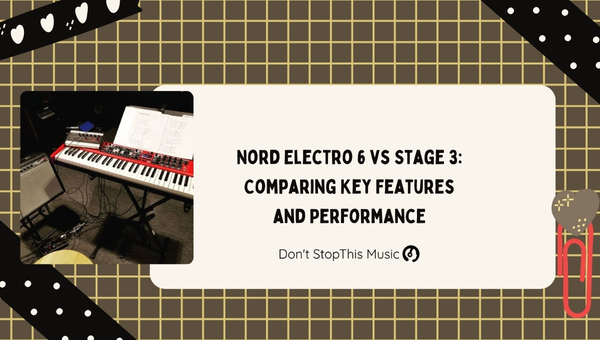
Deciding between the Nord Electro 6 and Stage 3 can feel like a daunting task, especially when both keyboards shine in their respective ways. As a musician, it’s essential to weigh the pros and cons of each model to find the perfect instrument that meets your individual needs. Let’s dive into some key differences and comparisons between these two titans of the keyboard world.
The Nord Electro 6 boasts a powerful 3-part multi-timbral engine, making it fantastic for layering and splitting sounds. Built with live performance in mind, this keyboard has great versatility and intuitive user interface. The Stage 3, on the other hand, is a performance powerhouse featuring advanced piano, organ, and synth sections, with the added bonus of Nord Sample Library compatibility. In essence, the Nord Stage 3 is a clear winner when it comes to sound options and studio-grade performance quality.
Now, let’s discuss pricing and portability. The Nord Electro 6, with its more streamlined feature set, is not only lighter but typically comes at a lower price point than the Stage 3. So, if you’re on a budget and you prioritize portability for gigs, the Electro 6 might be the ideal choice for you. However, if you seek a comprehensive keyboard with all the bells and whistles, investing in the Nord Stage 3 may just be the way to go.
Table of Contents
Nord Electro 6 vs Stage 3: Key Features
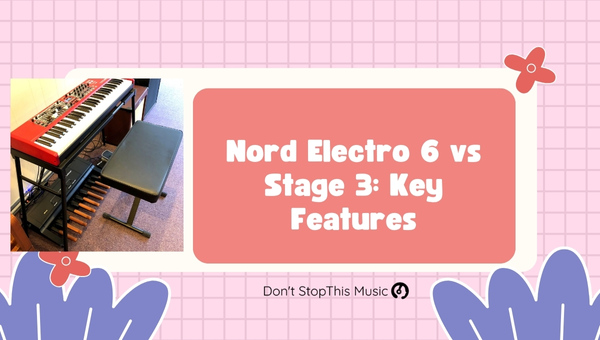
When comparing the Nord Electro 6 and the Stage 3 keyboards, several key features stand out. Both of these high-end instruments offer exceptional performance capabilities and functionality, but they cater to different needs. Let’s delve into their similarities and differences to understand better which one might be the right choice for you.
Firstly, it’s important to highlight the main similarity: both keyboards are manufactured by Nord, a Swedish company known for their top-quality instruments and iconic red design. This means that whichever model you choose, you’ll be getting a well-built, reliable, and high-performance machine.
Now, let’s look at the differences in key features:
Sound Generation
- The Nord Electro 6 uses a sample-based sound engine for pianos, electric pianos, organs, and more. It comes with the Nord Piano Library and Nord Sample Library offering numerous high-quality sounds.
- The Stage 3 offers a synthesizer section, which is absent in the Electro 6. This makes the Stage 3 more suitable for those who need synthesis capabilities, including creating or tweaking custom sounds.
Polyphony
- The Nord Electro 6 provides 120-voice polyphony (depending on the sound engine in use), which would be more than enough for most musicians.
- The Stage 3 boasts an impressive 400-voice polyphony for its piano section and a massive 34-voice for its synthesizer section, catering to those who demand the highest level of expressiveness.
| Keyboard Model | Polyphony (Piano) | Polyphony (Synth) |
|---|---|---|
| Nord Electro 6 | 120 voices | N/A |
| Stage 3 | 400 voices | 34 voices |
Key Range & Type
- The Electro 6 has three different models: 61, 73, and 88 keys. The models with 61 and 73 keys come with semi-weighted waterfall keybeds, while the 88-key model features a fully weighted hammer action keybed.
- The Stage 3 also has three models: Compact (73 keys), HP (76 keys), and HA (88 keys). The Compact model sports a semi-weighted waterfall keybed, while the HP and HA models boast fully weighted hammer action keybeds.
Effects & Control Options
- Both the Electro 6 and Stage 3 offer a variety of effects, such as reverb, chorus, and delay, that can be applied to your sounds. Both keyboards also have control options like pitch bend and modulation wheels.
- The Stage 3 provides additional effects and control options, including arpeggiators, morphing, and more, making it the more versatile choice for those who need greater creative possibilities.
I’ve experienced both the Nord Electro 6 and Stage 3, and the choice between the two will boil down to personal preferences and the specific features that suit your musical needs. The Electro 6 is a fantastic option for those wanting authentic piano, organ, and electric piano sounds, while the Stage 3 is the comprehensive choice for musicians who require advanced synthesis capabilities, extensive polyphony, and extra patches.
Keyboard and Performance
When it comes to keyboard and performance, the Nord Electro 6 and Stage 3 each offer unique features that cater to different needs and preferences. In this section, I’ll break down the key differences between the two models and discuss what makes each of them stand out in their own right.
Nord Electro 6 boasts a lightweight design, making it a great choice for musicians on the go. Its keybed is available in three different options: the 61-note (Waterfall action), the 73-note (Waterfall action), and the 76-note (Hammer action). The semi-weighted Waterfall keys provide a smooth, comfortable playing experience that’s perfect for organ and synth sounds. On the other hand, the Hammer action keys offer a more realistic, piano-like feel for those who prefer it.
Some notable features of the Nord Electro 6 include:
- Seamless Transitions: This allows you to switch between programs without any drop in sound or artifacts.
- 3-part multi-timbral capabilities: You can layer and split up to three sections simultaneously for an enhanced playing experience.
- Dual Organ engine with Physical Drawbars: It’s perfect for those who need precision control over their organ sounds.
In contrast, the Nord Stage 3 is designed as a comprehensive performance instrument, suitable for both live and studio settings. Its keybed is available in two different options: the 76-note (Hammer action) and the 88-note (Fully Weighted Hammer action). The fully weighted keys on the 88-note model provide an authentic piano feel that truly shines during live performances.
Some key features of the Nord Stage 3 are:
- Expanded memory: The Stage 3 offers twice the memory of its predecessor, allowing for more sounds and a larger library of quality samples.
- Fully weighted keybed: The 88-note model provides an authentic piano-playing experience.
- Layer and Split with optional crossfades: You can layer and split up to three sections, with optional smooth crossfading between split points for seamless transitions.
Here’s a quick comparison table of the key specifications:
| Feature | Nord Electro 6 | Nord Stage 3 |
|---|---|---|
| Keybed Options | 61, 73, 76-note | 76, 88-note |
| Action | Waterfall, Hammer | Hammer, Fully Weighted |
| Multi-timbral | 3-part | 3-part |
| Organ Engine | Dual with Drawbars | Dual with Drawbars |
| Memory | 1 GB for Piano section | 2 GB for Piano section |
To sum it up, the Nord Electro 6 is an excellent option for those who prioritize portability, while the Stage 3 offers more comprehensive features tailored for live and studio performances. Both models provide exceptional playability with their respective keybeds and action types, ensuring a satisfying experience no matter which you choose.
Sound Quality and Libraries
When comparing the Nord Electro 6 and Stage 3, one of the key factors to consider is the sound quality and libraries associated with each instrument. My experience with both keyboards has given me a deep understanding of their capabilities, and I’m impressed with how each one has a unique edge in this area.
The Nord Electro 6 is well-known for its authentic and high-quality emulations of vintage electro-mechanical and acoustic instruments. Some of its standout features include:
- Outstanding organ sounds: B3, Vox, and Farfisa
- Comprehensive electric pianos: Rhodes, Wurlitzer, and Clavinet
- Impressive sample library: Nord Sample Library 3.0
On the other hand, the Nord Stage 3 is designed as a versatile performance keyboard, with a broader and more substantial sound library. The Stage 3 caters to a wide variety of musical styles and genres, offering:
- High-quality synth section: Nord Lead A1 Synth Engine
- Acoustic Grand Pianos: Royal Grand 3D, White Grand, and Velo Upright
- String Resonance and Piano Pedal Noise: For added realism
The Stage 3 also incorporates an additional section called the Nord Sample Library 2.0 which allows for more advanced customization and expansion options compared to the Nord Electro 6.
Regarding sound quality, both keyboards feature Nord’s acclaimed audio engine that ensures top-notch performance. The Nord Electro 6, however, focuses more on emulating classic electro-mechanical sounds – making it perfect for musicians who love those vintage vibes. In contrast, the Stage 3 caters to a wider range of sounds and styles, giving it a more comprehensive sound palette to work with.
To better visualize some differences between the two libraries, here’s a table summarizing the key points:
| Feature | Nord Electro 6 | Nord Stage 3 |
|---|---|---|
| Organ Sounds | B3, Vox, and Farfisa | B3, Vox, and Farfisa |
| Electric Pianos | Rhodes, Wurlitzer, and Clavinet | Rhodes, Wurlitzer, and Clavinet |
| Synths | Limited | Nord Lead A1 Synth Engine |
| Acoustic Grand Pianos | Limited | Royal Grand 3D, White Grand, Velo Upright |
| Sample Library | Nord Sample Library 3.0 | Nord Sample Library 2.0 |
Ultimately, the decision between these two fantastic keyboards comes down to your personal needs and preferences as a musician. If you’re mainly focused on vintage electro-mechanical sounds, the Electro 6 is an excellent choice. However, if versatility and a broader sound library are more important to you, then the Stage 3 is the way to go.
User Interface and Functionality
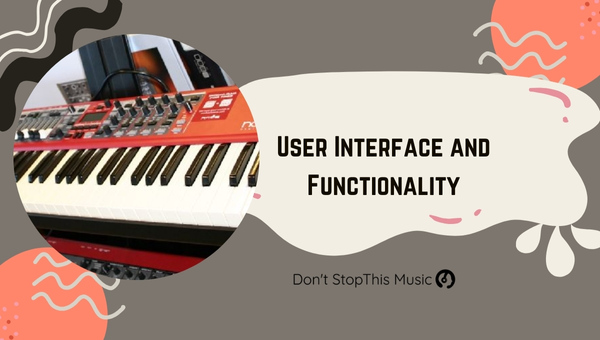
When it comes to user interface and functionality, both the Nord Electro 6 and Stage 3 offer a smooth and enjoyable experience. I’ve gotten the chance to test these products and I’m excited to share my findings.
The Nord Electro 6 shines with its dedicated controls for each of its sections. With its intuitive interface, you can easily adjust parameters without difficulty. This makes it ideal for live performances. Some features worth mentioning are:
- OLED display: provides clear visibility
- Split and layer functions: to create custom sounds
- Program section: with 4 speed-dial buttons for your favorite presets
On the other hand, the Stage 3 boasts a plethora of in-depth controls. It excels in versatility due to its three engine structure. Here are some highlights of the Nord Stage 3:
- Synth, Piano, and Organ engines: allow for diverse sounds
- Morph feature: enables smooth transitions between parameters
- LED-lit buttons: offer great visual feedback for performers
In comparing the user interface, The Electro 6 is more suitable for those who prefer a streamlined user experience. The Stage 3 is tailored for those who revel in advanced customization.
When it comes to functionality, both keyboards perform exceptionally well. The Nord Electro 6 offers a seamless transition feature, which ensures smooth and uninterrupted sound changes. This advantage is invaluable for live performers.
The Stage 3, on the other hand, comes equipped with the Song Mode. This mode allows you to save and sort your settings for up to 999 songs, making it a great companion for gigging musicians.
Let’s compare some key specs between these two models:
| Specification | Nord Electro 6 | Nord Stage 3 |
|---|---|---|
| Polyphony | 120 voices | 120 voices |
| Keyboard Types | 61, 73, 88 keys | 61, 73, 88 keys |
| Sound Engines | 3 engines | 3 engines |
| Effects | 6 types | 6 types |
| Weight | 15.3 lbs (73-key) | 18.7 lbs (73-key) |
In conclusion, both the Nord Electro 6 and Stage 3 have their strengths. The Electro 6 is geared towards instant control and ease of use, while the Stage 3 leans more towards advanced features and deeper customization. Both models cater to different preferences, so performers will need to decide which one best fits their individual style and needs.
Gig-Ready Capabilities
When it comes to gig-ready capabilities, both the Nord Electro 6 and Stage 3 offer a range of features that make them excellent choices for live performances. In this section, I’ll delve into the versatility, sound quality, and ease of use these two models have in a gigging context.
First, let’s focus on versatility. The Nord Electro 6 allows for up to six split and layer zones with seamless transitions when changing sounds or programs. This comes in handy for musicians who want a quick and smooth transition between different sounds during a performance. On the other hand, the Stage 3 offers even more flexibility in this area. It enables the user to have up to three separate keyboards, each with its split and layer zones. This feature, known as Panel A, B, and C, is perfect for multitasking keyboardists playing multiple parts at once.
In terms of sound quality, both instruments provide stunning audio. The Nord Electro 6 incorporates the B3 Tonewheel Organ, a highly praised model emulating the classic sounds of Hammond organs. Likewise, the Stage 3 includes a beautiful B3 Tonewheel Organ simulation, along with a range of acoustic and electric pianos, synths, and many other keyboard staples.
Some details on sound engines:
| Model | Primary Sound Engines | Unique Sound Features |
|---|---|---|
| Electro 6 | B3 Tonewheel Organ, sampled piano, synth | Sample Library, Effect Section 1 and 2 |
| Stage 3 | B3 Tonewheel Organ, sample synth, and an FM |
As for ease of use, both the Electro 6 and Stage 3 benefit from Nord’s user-friendly interface. This design ensures that altering and customizing sounds is a breeze during live performances. They feature dedicated physical controls for intuitive sound tweaking, eliminating any need to dive into menus during a gig. Additionally, musicians can easily connect a range of audio and MIDI devices to either instrument for maximum flexibility.
Some major gig-ready capabilities of each model can be summarized in these key points:
- Nord Electro 6:
- Six split and layer zones
- B3 Tonewheel Organ
- Seamless transitions
- User-friendly interface
- Nord Stage 3:
- Panel A, B, and C
- B3 Tonewheel Organ
- Wide range of sounds
- User-friendly interface
Both the Nord Electro 6 and Stage 3 boast impressive gig-ready capabilities that cater to various musicians’ needs. The choice between the two may ultimately come down to the specific requirements of your live performances and your preferences in terms of versatility and sound complexity.
Connectivity and Integration

When comparing the Nord Electro 6 and Stage 3, it’s crucial to consider their connectivity and integration features. Both keyboards offer a wide array of options, making them versatile choices for various setups.
Nord Electro 6 provides a solid set of connectivity options to suit different needs:
- USB port for updates, data transfer, and MIDI
- Five-pin MIDI in and out
- Two audio outputs (left and right)
- Monitor input for connecting an external sound source
- Sustain and control pedal inputs
The Nord Electro 6 integration with other gear is a breeze! With USB MIDI, users can seamlessly connect to computers or other MIDI devices. Moreover, Nord offers comprehensive software with the Sound Manager and the Sample Editor to enhance functionality further.
On the other hand, Stage 3 boasts a more extensive collection of connectivity features:
| Feature | Nord Stage 3 |
|---|---|
| USB port | Updates, data transfer, and USB MIDI |
| MIDI | Five-pin in, out and thru |
| Audio outputs | Four outputs (left, right, monitor, and headphone) |
| Input | Monitor input for external sound source |
| Pedal inputs | Control, sustain, swell, and morph |
The Nord Stage 3 stands out for its additional routing options and MIDI thru port, which can be essential in more complex setups. Its integration with external gear is equally impressive, given the extensive control it offers through the additional pedal inputs.
Both the Electro 6 and Stage 3 keyboards are compatible with the Nord Sound Manager software. This compatibility enables easy management of programs, sounds, and samples. Users can conveniently backup, organize, and transfer data between their keyboards and computers.
To top it all, Nord has developed a great app for the iPad called Nord Piano Monitor. This app provides an optimal way to experience the incredible piano sounds of these keyboards while using an iPad.
In terms of connectivity and integration, both the Nord Electro 6 and Stage 3 offer ample features. However, the Nord Stage 3 takes it up a notch with its extended capabilities and routing options. While both keyboards are excellent choices, musicians requiring more advanced connectivity may lean towards the Stage 3.
Software Support
When comparing the Nord Electro 6 and the Nord Stage 3, it’s essential to consider the software support offered for each model. Both keyboards come with a set of proprietary and third-party software options that can help enhance your music production experience.
Nord Electro 6 provides a great software package that makes it easy to customize your sounds and settings:
- Nord Sound Manager enables you to organize and transfer sounds, load new sounds from the Nord Piano Library, and even backup your settings with ease.
- Nord Sample Editor 3 allows you to create and edit samples, map them across the keyboard, and even apply real-time effects.
- Nord Electro 6 also supports MIDI integration with your favorite DAWs and music production software.
On the other hand, Nord Stage 3 offers an impressive selection of software to create an all-around music production environment:
- Like the Electro, the Stage 3 comes with Nord Sound Manager for sound management and organization.
- Nord Piano Library and Nord Sample Library are accessible, with a massive range of piano sounds, samples, and more.
- The Nord Stage 3 also features the Nord Sample Editor 3, providing users the ability to edit and manipulate samples.
- Additionally, the Stage 3 has an External Section, which allows you to control external MIDI instruments like synths and drum machines.
- Integration with various DAWs and VST instruments is also seamless, making it a versatile solution for studio and live performance environments.
While both keyboards boast an extensive range of software tools, the Nord Stage 3 has an edge with its External Section, enhanced DAW integration, and access to both the Nord Piano Library and Nord Sample Library. Here is a quick breakdown comparing the software support for the Electro 6 and Stage 3:
| Feature | Nord Electro 6 | Nord Stage 3 |
|---|---|---|
| Nord Sound Manager | Yes | Yes |
| Nord Sample Editor 3 | Yes | Yes |
| MIDI Integration | Yes | Yes |
| Nord Piano Library | Yes | Yes |
| Nord Sample Library | No | Yes |
| External Section | No | Yes |
| DAW & VST Integration | Basic | Enhanced |
To summarize, the Nord Electro 6 offers a solid range of software support for sound creation and customization. However, the Nord Stage 3 steps it up with some additional features that make it a more versatile workstation for musicians and producers, especially those who often use external MIDI instruments and require more advanced DAW integration in their workflows.
Pricing and Value for Money

When considering the purchase of a new keyboard, it’s natural to weigh the pros and cons of each option. In this case, let’s dive into the pricing and value for money for the Nord Electro 6 and the Stage 3.
The Nord Electro 6 comes in three different models: Nord Electro 6D 61, Nord Electro 6D 73, and Nord Electro 6 HP. These models vary in keyboard size and type, which impacts their prices:
- Nord Electro 6D 61: $2,499
- Nord Electro 6D 73: $2,999
- Nord Electro 6 HP: $3,499
The Electro 6 series offers a wide range of sounds, such as organ, piano, and synth, which makes it highly versatile for different musical styles. Additionally, the intuitive design and user-friendly interface make it a popular choice among keyboard enthusiasts.
The Nord Stage 3 is also available in three models: Nord Stage 3 Compact, Nord Stage 3 HP76, and Nord Stage 3 88. These models vary in keyboard size and type as well, affecting their cost:
- Nord Stage 3 Compact: $3,599
- Nord Stage 3 HP76: $4,199
- Nord Stage 3 88: $4,499
The Stage 3 series stands out for its advanced features and robust sound engine that includes piano, organ, synth, and effect sections. With dedicated dials and buttons for easy tweaking and on-the-fly adjustments, the Stage 3 is perfect for those looking for a powerful performance instrument.
When comparing value for money, it’s essential to keep in mind your specific needs and preferences. Here’s a quick breakdown of the benefits of each series:
Nord Electro 6:
- More affordable prices
- Wide range of sounds
- User-friendly interface
Nord Stage 3:
- Advanced features and sound engine
- Dedicated dials/buttons for quick adjustments
- Powerful performance instrument
Taking all of this into consideration, it’s clear that both the Nord Electro 6 and Stage 3 have their advantages. The Electro 6 offers affordability, versatility, and a user-friendly experience, while the Stage 3 provides more advanced features and a powerful sound engine for live performances. Ultimately, the choice between the Nord Electro 6 and Stage 3 comes down to your specific needs and budget.
Pros and Cons
When comparing the Nord Electro 6 and Stage 3, it’s crucial to evaluate each keyboard’s pros and cons to make an informed decision. Having experienced both products, I can share my insights to help you understand the key differences and factors to consider.
Nord Electro 6:
_Pro*_s of the Nord Electro 6 include:
- Simplicity: The Electro 6 is known for its straightforward design and easy-to-navigate interface.
- Portability: Weighing less than the Stage 3, it’s ideal for gigging musicians who require a lighter instrument for transportation.
- Organ emulation: The Electro 6 excels in organ sounds, providing an authentic experience for players seeking a focus on organ tones.
- Affordability: Generally, the Electro 6 comes at a lower price point compared to the Stage 3, offering a balance between quality and affordability.
Con_s of the Nord Electro 6 are:
- Limited sound library: The Electro 6 has a smaller sound library in comparison to the Stage 3, which may be limiting for some musicians.
- Fewer keyboard options: The Electro 6 is available in 61 or 73-key versions only, offering less variety for those who prefer 88-key instruments.
Nord Stage 3:
Advantages of the Nord Stage 3 include:
- Robust sound library: Featuring the incredibly versatile Nord Sample Library 3.0, the Stage 3 provides a wealth of sounds for musicians to explore.
- Keyboard options: The Stage 3 offers a choice between 88-key, 76-key, and compact 73-key versions, catering to various preferences and styles of playing.
- Integration: With seamless transitions, the Stage 3 allows smooth switching between programs and external MIDI without any audio cut-offs.
- Synth capabilities: The Stage 3 boasts additional synth-related features, such as the OSC section and A1 Synth engine, providing more creative freedom for players in search of synth tones.
Drawbacks of the Nord Stage 3 are:
- Pricier: The Stage 3 generally has a higher price tag than the Electro 6, which may be a significant factor for budget-conscious musicians.
- Heavier and bulkier: The added features and capabilities of the Stage 3 come at the cost of increased weight and size, making it less portable than the Electro 6.
Below is a summary of the key differences in a markdown table:
| Feature | Nord Electro 6 | Nord Stage 3 |
|---|---|---|
| Weight | Lighter | Heavier |
| Sound Library | Smaller | Nord Sample Library 3.0 (larger) |
| Keyboard Options | 61/73 keys | 88/76/73 keys |
| Synth Capabilities | Limited | Advanced (A1 Synth engine, OSC) |
| Price | Generally more affordable | Generally pricier |
In summary, the Nord Electro 6 offers simplicity, portability, and affordability, while the Nord Stage 3 provides additional options and flexibility. Keep these factors in mind when choosing the keyboard that best suits your needs and preferences.
Conclusion: Which One to Choose
After thoroughly examining both Nord Electro 6 and Stage 3, I’ve come to a conclusion that might help you decide which keyboard is the right one for you. The critical aspects to consider include built-in sounds, performance features, portability, and of course, price.
Nord Electro 6 shines in its simplicity and ease of use, offering phenomenal electric piano and organ sounds. It’s an excellent choice for those focused on:
- Quick access to classic keyboard instruments
- Great organ and electric piano sounds
- Less complexity and streamlined features
On the other hand, Nord Stage 3 is the flagship of Nord keyboards and offers a wealth of built-in sounds and performance tools. It’s best for musicians who require:
- More diverse sound options
- Extensive control over performance settings
- Seamless layering and split functionality
Though Nord Electro 6 is more affordable and lighter, it might not fulfill the needs of every musician. If your focus is on versatile sound and advanced control, Nord Stage 3 is a better investment.
So which one should you choose? Ultimately, it depends on your preferences and budget – if you’re into classic keys with a more comfortable set-up, the Electro 6 is your go-to option. But if you’re a versatile musician looking for greater control and sound variety, the Stage 3 is the ideal choice.
Take a moment to weigh your needs and desires, and you’ll figure out which one is the right fit for you. Happy playing!