
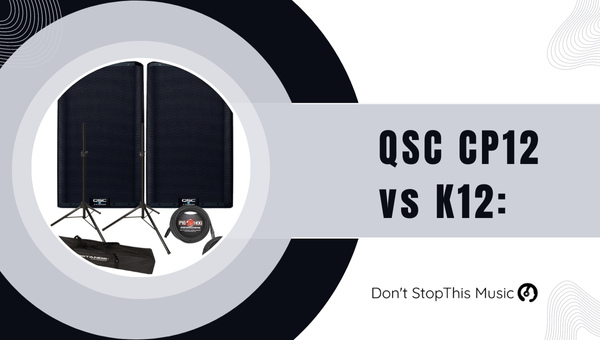
When it comes to deciding on a high-quality speaker system, the QSC CP12 and the K12 models are frequently the talk of the town. Both offer top-notch features and pristine sound quality, making it challenging to determine which one would be the better choice. In this article, I’ll compare the QSC CP12 and the K12, looking at their performance, specifications, and the overall value they provide to potential buyers.
First, let’s get a general overview of the two products. The QSC CP12 is a compact and versatile active loudspeaker, known for its impressive power and remarkable sonic performance. On the other hand, the K12 model is part of QSC’s K Series lineup, boasting a more refined design and a slightly higher price tag due to its advanced features and specifications.
As I go through this comparison, I’ll discuss the strengths and weaknesses of each speaker while highlighting any crucial differences in their output capabilities, durability, and ease of use. This comparison should help you make a more informed decision when shopping for the perfect speaker system to meet your needs.
- Understanding the QSC CP12 and K12 Series
- Comparing Speaker Specifications
- Sound Quality Differences
- Design and Appearance
- Ease of Portability
- In-Depth Look at QSC CP12 Features
- Exploring QSC K12 Capabilities
- Ideal Applications and Use Cases
- Price and Value for Money
- Final Thoughts on QSC CP12 vs K12
Table of Contents
Understanding the QSC CP12 and K12 Series
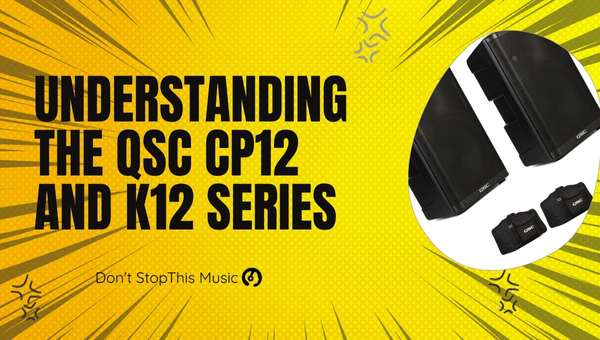
As someone who has used both the QSC CP12 and K12 series, I can confidently say they are top-notch professional audio equipment. Let’s dive deeper into these powerful loudspeakers to better understand their similarities, differences, and applications.
The QSC CP12 is known for its portability and affordability. With a lightweight design of 30.3 lbs (13.7 kg) and a price point that is more approachable for new users or those on a budget, the CP12 has become a popular choice. Featuring a 1000W peak amplifier, it delivers powerful sound quality, making it suitable for small to medium-size venues. Its user-friendly interface allows for easy setup and control, making it accessible for all levels of users.
On the other hand, the QSC K12 is a high-power, 2-way loudspeaker that boasts an impressive 2000W peak amplifier. It’s designed for applications requiring greater output, making it ideal for larger venues and professional events. Weighing in at 41.3 lbs (18.7 kg), it’s still portable, but less so than the CP12. The K12 comes with advanced features, such as Intrinsic Correction™ of loudspeaker management and a premium 1.75″ diaphragm HF driver as opposed to the CP12’s 1.4″ driver. Building on the success of the initial K series, the K12.2 has an updated digital display, allowing you to save presets and customize EQ settings.
Here’s a summary of the key differences between these two models:
| Feature | QSC CP12 | QSC K12 |
|---|---|---|
| Peak Amplifier | 1000W | 2000W |
| Weight | 30.3 lbs (13.7 kg) | 41.3 lbs (18.7 kg) |
| HF Diaphragm | 1.4″ | 1.75″ |
| Price Range | Affordable option | Higher-end model |
Given their diverse features, here are some factors to consider when choosing between the CP12 and K12:
- Venue size: If you’re dealing with smaller venues or require a more portable option, the CP12 is a better fit. However, for larger events, the K12 is a more powerful and suitable choice.
- Budget: The CP12 is more affordable, making it a great option for those with a limited budget. The K12, while more expensive, offers higher-end features and specs.
- User experience: The CP12 is designed with user-friendliness in mind, making it an excellent option for beginners, while the K12 is suitable for professionals who demand more advanced capabilities and customization.
Based on my experience and these factors, you should be able to make a well-informed decision between the QSC CP12 and K12 series loudspeakers.
Comparing Speaker Specifications
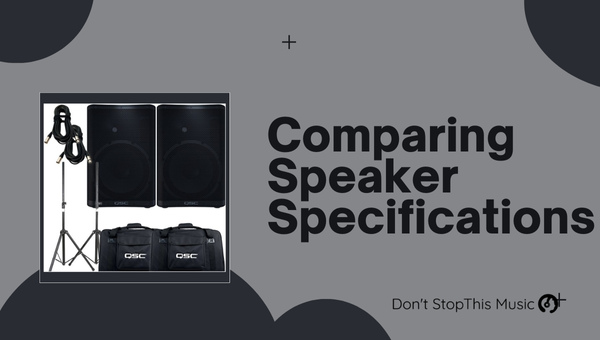
When looking at the QSC CP12 and K12 speakers, it’s important to dive into their specifications, so we can better understand their capabilities and make an informed choice. Both of these models are popular, but they have key differences that may sway your decision.
In terms of power, the QSC CP12 features a 1000-watt Class D amplifier, while the QSC K12 comes with a more powerful 2000-watt Class D amplifier. This increased power output allows the K12 to deliver higher sound pressure levels (SPL), which means it can produce louder volumes without distortion.
- Power Output:
- QSC CP12: 1000 watts
- QSC K12: 2000 watts
The dimensions and weight of each speaker also play a crucial role in portability and ease of setup. The CP12 is the lighter and more compact option, making it convenient for transportation and setup. On the other hand, the K12 is heavier, but with its increased size comes enhanced performance.
- Dimensions and Weight:
- QSC CP12: 20.3″ x 12.7″ x 12.8″ (516 x 322 x 325 mm), 30.3 lbs (13.7 kg)
- QSC K12: 23.7″ x 14.0″ x 14.0″ (603 x 356 x 356 mm), 41 lbs (18.6 kg)
When comparing the frequency response, the K12 has a broader range, from 48 Hz to 20 kHz. In contrast, the CP12 covers a range of 49 Hz to 20 kHz. While these differences might seem subtle, a wider frequency response contributes to a fuller, richer sound profile.
- Frequency Response:
- QSC CP12: 49 Hz – 20 kHz
- QSC K12: 48 Hz – 20 kHz
Both speakers come with multiple input options, including XLR, 1/4″ (TS), and RCA jacks. They also have various output options, such as XLR Thru and Mix Out, which allow for easy integration with other equipment in your audio setup.
- Input and Output Options:
- Both CP12 and K12: XLR, 1/4″ (TS), RCA (input); XLR Thru, Mix Out (output)
When considering dispersion, the CP12 has a 75° conical coverage pattern, while the K12 features a 75° axisymmetric cone. While these specifications may seem similar, the K12’s axisymmetric cone provides more even coverage throughout the room, particularly for bigger areas.
- Dispersion:
- QSC CP12: 75° conical
- QSC K12: 75° axisymmetric
In summary, both the QSC CP12 and K12 are well-regarded speaker options with unique features to cater to different needs. The CP12’s smaller size and lighter weight make it ideal for portability, while the K12’s increased power output and wider frequency response provide better overall performance. Whether you choose the CP12 or K12, you’ll be investing in a quality speaker from a trusted manufacturer.
Sound Quality Differences
When comparing the QSC CP12 and the K12, it’s crucial to understand the differences in sound quality between the two speakers. As a seasoned user of both products, I’ve noticed some subtle yet important distinctions in their audio performance.
The QSC CP12 is an impressive speaker, offering great sound quality at a more affordable price point. This compact 12-inch active loudspeaker features a Class D amplifier producing 1000 watts, with a frequency response range of 49 Hz – 20 kHz. Its wide dispersion, smooth frequency response, and powerful low-end extension make it a worthy option for many applications, including live music, mobile DJ-ing, and public speaking events.
| QSC CP12 | QSC K12 |
|---|---|
| Class D Amplifier | Class D Amplifier |
| 1000 Watts | 2000 Watts |
| 49 Hz – 20 kHz | 48 Hz – 20 kHz |
| 126 dB Max SPL | 131 dB Max SPL |
On the other hand, the QSC K12 is often considered the flagship of the QSC portable speaker lineup. This 12-inch active loudspeaker is equipped with a robust 2000-watt Class D amplifier and has a frequency response range of 48 Hz – 20 kHz. The K12 boasts an exceptional sound quality, with a razor-sharp audio precision and a whopping 131 dB maximum sound pressure level (SPL). Moreover, the QSC K12 is highly regarded for its inherent linearity, reducing distortion and providing a clear and detailed listening experience.
Some key points to address when comparing the sound quality of both speakers:
- Amplifier power: The K12 has twice the power of the CP12, resulting in a more efficient output and greater headroom for dynamic audio performances.
- SPL: With a higher maximum SPL, the K12 can deliver louder sound while maintaining clarity and preventing distortion.
- Frequency response: Though the difference in frequency response is marginal, the K12 has a slightly wider range, giving it a fuller and richer sound.
Ultimately, when deciding between the QSC CP12 and K12, it’s important to consider your specific needs and priorities. If you’re seeking superb sound quality with minimal compromises, the K12 should be your go-to speaker. However, if affordability and portability are of greater concern, the CP12 offers excellent value without sacrificing too much in terms of audio performance.
Design and Appearance
When comparing the QSC CP12 and K12 speakers, it’s essential to examine their design and appearance. After all, aesthetics and features play a crucial role in making the right choice for your needs. In this section, I’ll provide insights into their distinctions and similarities.
The QSC CP12 is built with portability in mind. With a weight of 30.3 lbs (13.7 kg), this speaker is relatively easy to carry and transport. In addition, it boasts a compact design that measures 16.2 x 13.8 x 21.2 inches (411 x 350 x 539 mm). The exterior is made of sturdy ABS plastic, and the speaker grille is covered in powder-coated steel for added durability. This combination ensures that the CP12 can withstand the rigors of regular use.
- Weight: 30.3 lbs (13.7 kg)
- Dimensions: 16.2 x 13.8 x 21.2 inches
- Materials: ABS plastic and powder-coated steel
On the other hand, the QSC K12 is a heavier and larger speaker, weighing 41 lbs (18.6 kg) and measuring 23.7 x 14 x 14 inches (602 x 356 x 356 mm). The rugged design is made of high-quality ABS plastic and features a powder-coated steel grille, ensuring it can handle demanding environments. Additionally, the K12’s ergonomic handles ensure easier transportation despite its heavier weight.
- Weight: 41 lbs (18.6 kg)
- Dimensions: 23.7 x 14 x 14 inches
- Materials: ABS plastic and powder-coated steel
A common feature between the two speakers is their angled design, which allows for versatility in positioning. Both can be placed vertically on a pole or horizontally as a floor monitor, making them suitable for various setups.
In terms of appearance, the QSC CP12 and K12 share a similar, sleek look, with black exteriors and QSC logos on the front. However, the K12 is distinguished by a slightly larger cabinet and a more prominent power LED on the front grille.
In conclusion, the QSC CP12 and K12 speakers offer durability, versatility, and a similar appearance. While the CP12’s lighter weight and smaller size make it more portable, the K12 boasts a more substantial build that can cater to more demanding environments. Regardless of the model you choose, rest assured that QSC’s design and appearance live up to their reputation for quality and reliability.
Ease of Portability
When comparing the QSC CP12 and the QSC K12, portability is an essential factor to consider. Depending on your needs, whether you’re a solo musician, a DJ, or a small event organizer, the ease of transporting and setting up your sound system is crucial.
First, let’s take a look at the weight of these two models. The QSC CP12 has a lightweight design, weighing in at 30.3 lbs. On the other hand, the K12 is slightly heavier, coming in at 41 lbs. This difference might not seem huge at first glance, but when lifting and moving the speakers frequently, those extra pounds can make a difference.
Here’s a quick comparison:
| Model | Weight |
|---|---|
| CP12 | 30.3 lbs |
| K12 | 41 lbs |
One factor that adds to the CP12’s portability is its compact size. The dimensions of the CP12 are 20.7 x 16.1 x 13.1 inches, making it an easy-to-handle option for solo performers or those with limited storage space. The K12, however, has larger dimensions, 23.7 x 14 x 14 inches, which may take up more space in your vehicle or storage area.
When it comes to carrying and moving the speakers, both models come equipped with comfortable ergonomic handles. In addition, they have a 35 mm pole socket for easy mounting on speaker stands. You can also use them as floor monitors by employing the built-in monitor feet, allowing for flexible setup options depending on the venue.
When considering the accessories needed for setup, it’s important to note that the QSC CP12 and K12 both have similar input and output options. They feature two combo XLR/TRS line inputs, one 3.5mm mini-jack input, as well as XLR and 1/4″ output connections. In this regard, there’s no significant difference in portability between the two models.
To summarize, the key differences in ease of portability between the QSC CP12 and K12 are:
- Weight: The CP12 is about 10 lbs lighter than the K12.
- Size: The CP12 has a more compact design.
- Similar input and output options, handles, and mounting options.
Ultimately, the choice between the QSC CP12 and K12 for ease of portability depends on your specific needs and preferences. If you value a lightweight, compact option for frequent transportation, the CP12 could be an excellent choice. If size and weight are less of a concern for you, the K12 offers a powerful option with similar portability features. The shared features of these two models ensure that, whichever you choose, you can expect excellent performance and effortless setup.
In-Depth Look at QSC CP12 Features
Focusing on the QSC CP12 now, it’s time to dive into its features and explore why this speaker has made a name for itself in the audio equipment market. The CP12 offers versatility, power, and portability to meet various audio needs.
One standout feature of the CP12 is its 1000 watts of continuous power, undoubtedly providing quality sound output. It boasts a 12-inch, two-way design, which helps deliver impeccable audio clarity at different frequencies. Thanks to its Directivity Matched Transition (DMT) technology, the CP12 ensures consistent coverage no matter the listening area.
Efficiency is another notable characteristic of this speaker. The Class-D amplifier significantly reduces power consumption, lessening the burden on your electricity bill, while still offering optimal performance. Temperature control and protective circuitry tackle potential overheating issues and safeguard the speaker from potential harm.
Furthermore, the CP12 has six preset contours making it a versatile option for multiple applications:
- Default for typical applications
- Dance for DJ events or bass-heavy music
- Live for live band performances
- Monitor for stage monitoring purposes
- Speech for presentations and announcements
- Custom for user-defined configurations
Equipped with QSC’s Advanced DSP (Digital Signal Processing) technology, the CP12 allows for fine-tuning adjustments to achieve the desired sound quality in various environments.
Here’s a quick comparison between the CP12 and K12.2 speaker specifications:
| Specification | QSC CP12 | QSC K12.2 |
|---|---|---|
| Continuous Power Output | 1000 watts | 2000 watts |
| Maximum SPL | 126 dB | 132 dB |
| Frequency Range (-10 dB) | 47 Hz – 20kHz | 45 Hz – 20kHz |
| Frequency Response (-6 dB) | 49 Hz – 20kHz | 48Hz – 20 kHz |
| Net Weight | 13.7 kg (30.3 lbs) | 17.7 kg (39 lbs) |
The CP12 is also lightweight and portable, with an overall weight of 30.3 lbs, making it easy to transport and set up for various events. Its rugged, impact-resistant ABS enclosure ensures durability, so you won’t have to worry about the occasional bump or scrape.
In terms of connectivity, the CP12 has two balanced XLR/TRS combo inputs, an additional 1/8″ TRS stereo input, and a 3-channel mixer. These features make it compatible with different audio sources and allow easy control of the device’s settings.
Without a doubt, the QSC CP12 provides a range of versatile features designed to give you impressive sound quality and adaptability in various situations.
Exploring QSC K12 Capabilities
I’ve personally had the chance to experience the QSC K12 speakers and here’s what I found regarding their capabilities. QSC K12 speakers are versatile and powerful, offering immense flexibility when it comes to live sound reinforcement, playback, and stage monitoring applications. These speakers are known for their exceptional sound quality and robust construction, making them a reliable choice for professionals and hobbyists alike.
In terms of power output, QSC K12 speakers have a 1000-watt continuous Class-D power module. This ensures that they deliver consistent and distortion-free audio across a wide frequency range. The speakers are equipped with a 12-inch low-frequency woofer and a 1.75-inch high-frequency compression driver, which contributes to their clear highs and punchy lows. When it comes to frequency response, the QSC K12 has a versatile range:
| Frequency Range (-10 dB) | Frequency Response (-6 dB) |
|---|---|
| 48 Hz – 20 kHz | 60 Hz – 18 kHz |
One standout feature of the QSC K12 is its DEEP (Digital Extension and Excursion Processing) technology. This feature enhances low-frequency performance by ensuring that audio remains clear and undistorted, even at high volumes. Users can easily adjust DEEP settings through the rear panel.
On top of that, the QSC K12 offers a generous set of input options, which improves compatibility with various audio sources:
- Two balanced XLR/F ¼-inch line/mic combo inputs
- One stereo RCA input
- One balanced XLR/M line output
QSC K12 speakers are designed with easy setup and portability in mind. They come equipped with an integrated pole socket that securely mounts on a 35mm pole or can be used as a wedge monitor. With their rugged design and lightweight construction, these speakers can withstand the rigors of professional use while being easy to transport.
Some additional features of the QSC K12 speakers include:
- Refined, professional appearance with the use of black grill cloth
- User-adjustable contours, allowing for tailored sound to match various applications
- Intrinsic Correction™, which enhances performance and consistent response across the entire audience area
To sum it up, the QSC K12 offers a variety of capabilities, making it an excellent choice for live sound reinforcement, stage monitoring, and playback applications. With its powerful output, DEEP technology, flexible input options, and portability, the K12 is an outstanding speaker for various audio needs.
Ideal Applications and Use Cases
When exploring the features of the QSC CP12 and K12 speaker models, it’s important to consider which applications and use cases are best suited for each. By understanding which situations call for which model, I aim to help you make an informed decision regarding your next QSC speaker purchase.
First and foremost, let’s examine the ideal applications for each model:
- QSC CP12:
- Small live music venues
- Mobile DJs
- Presentations and conference rooms
- Houses of worship
- QSC K12:
- Larger live music venues
- Nightclubs and performance spaces
- Corporate events
- Rental and production applications
Now, I’ll delve into specific use case scenarios where each model shines.
QSC CP12: With its lightweight design, the CP12 is perfect for mobile DJs and events where portability is vital. The CP12 also excels in small live music venues, where it can fill a room with crisp, clear sound without overpowering the space. Its versatility makes it ideal for presentations and conference rooms where high-quality sound is essential. Additionally, the CP12’s performance in houses of worship provides both speech reinforcement and music playback capabilities.
QSC K12: The K12 was designed with more substantial events in mind. This powerful, versatile speaker boasts an impressive frequency response and delivers stunning sound quality at high output levels, making it perfect for larger live music venues and nightclubs. The K12 is also an excellent choice for corporate events, providing a sense of professionalism and ensuring sound clarity. Finally, its durability and high-performance capabilities make the K12 an ideal speaker for rental and production applications.
In summary, the QSC CP12 is best suited for smaller events requiring portability and versatility while the QSC K12 excels in larger settings with more demanding sound requirements.
The table below highlights the key elements of each speaker:
| Aspect | QSC CP12 | QSC K12 |
|---|---|---|
| Ideal Applications | Small live music venues | Larger live music venues |
| Mobile DJs | Nightclubs | |
| Presentations | Corporate events | |
| Houses of worship | Rental and productions | |
| Use Cases | Mobility-focused events | High output requirements |
| Speech reinforcement | Professional settings | |
| Music playback | Demanding sound quality |
With these applications and use cases in mind, consider which QSC speaker model will best serve the needs of your specific situation.
Price and Value for Money
When it comes to comparing the QSC CP12 and K12 speakers, price and value for money are definitely factors to consider. In this section, I’ll break down the pricing of these two speakers and examine whether they offer a good bang for your buck.
Based on my research, the price difference between the two speakers is quite significant. The CP12 is generally more affordable, with a price tag ranging from $699 to $799. On the other hand, the K12 usually falls within the $1,099 to $1,299 price bracket. Let’s dig a bit deeper into what each speaker offers to see if the higher price means a better value.
Here’s a comparison table highlighting the main features of each speaker:
| Feature | QSC CP12 | QSC K12 |
|---|---|---|
| Power Output | 1,000 W | 2,000 W |
| Frequency Range (-10dB) | 47 Hz – 20 kHz | 45 Hz – 20 kHz |
| Maximum SPL | 126 dB | 131 dB |
| Amplifier Class-D | Yes | Yes |
| Coverage Angle (H x V) | 75° x 75° | 75° x 75° |
| Enclosure Material | Polypropylene | ABS |
| Weight | 30.3 lbs (13.7 kg) | 41 lbs (18.6 kg) |
| Pole Socket | 35 mm | 2 x M10, 35 mm |
The QSC CP12 offers 1,000 W of power output, which is adequate for small to medium-sized venues or events. With a frequency range of 47 Hz – 20 kHz and a maximum SPL of 126 dB, it’s a reliable option that won’t break the bank. The speaker is fairly lightweight, making them easier to transport and set up.
On the other side of the spectrum, the K12 delivers a whopping 2,000 W of power output, suitable for larger venues and louder events. It has a wider frequency range (45 Hz – 20 kHz) and a higher maximum SPL of 131 dB. While this speaker is heavier than the CP12, it also comes with a more durable and robust ABS enclosure material.
Taking these factors into account, let’s determine which speaker offers better value for money:
- QSC CP12: An affordable option with an adequate power output, the QSC CP12 is a great choice for those on a budget or with smaller event requirements. It’s lightweight and easy to transport, making it a practical and versatile choice.
- QSC K12: The higher price of the K12 reflects its increased power output, wider frequency range, and superior maximum SPL. These features make it ideal for larger events and venues, but may be unnecessary for smaller gatherings.
In summary, both the QSC CP12 and K12 offer value for money, depending on your specific needs and budget.
Final Thoughts on QSC CP12 vs K12
After comparing the QSC CP12 and K12, it’s clear that each speaker brings its own unique features and benefits to the table. In this final section, I’ll provide my thoughts on each model and help you decide which one might be the best fit for you.
In terms of sound quality, the K12 wins out. With its higher output power, the K12 is able to achieve more natural sounding midrange and an overall more balanced frequency response compared to the CP12. Additionally, the K12 offers various DSP options that allow users to better shape the sound to their preferences.
As for portability and ease of use, the CP12 has the upper hand. The CP12 weighs less than the K12 and is easier to transport. Additionally, its built-in handles make it more user-friendly. This can be especially important if you plan on frequently moving the speaker for different gigs or events.
Price-wise, the CP12 is more budget-friendly, making it an attractive option for those who are cost-conscious. However, it’s important to take into account the features and benefits of each model when considering the price to make sure that you’re getting the best value for your investment.
Here’s a quick summary to help you make your decision:
QSC CP12:
- Lighter and more portable
- Built-in handles
- Budget-friendly
QSC K12:
- Superior sound quality
- More output power
- Various DSP options
Ultimately, your choice between the QSC CP12 and K12 will come down to your personal preferences and needs. For those who prioritize sound quality and customization options, the K12 might be the ideal choice. On the other hand, if you’re looking for something more portable and budget-friendly, the CP12 could be a better fit. Whatever you decide, you can trust that both the CP12 and K12 will deliver reliable performance and quality sound for your events.